
For This Child I Prayed: Hannah's Prayer and Dedicating Our Children to the Lord
In-depth Bible study on 1 Samuel 1:26-28 about motherhood and fatherhood: Hannah's honest prayer in a season of waiting and the daily surrender of our children to the Lord's purpose.
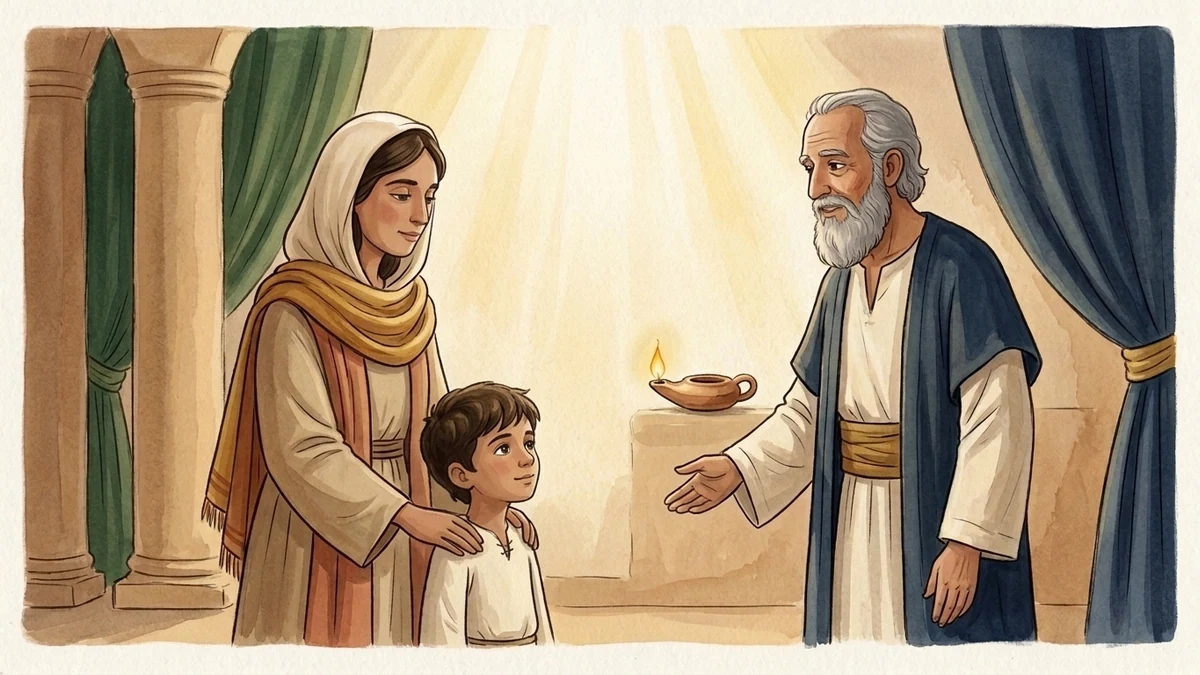
““Please, my lord,” said Hannah, “as surely as you live, my lord, I am the woman who stood here beside you praying to the LORD. I prayed for this boy, and since the LORD has granted me what I asked of Him, I now dedicate the boy to the LORD. For as long as he lives, he is dedicated to the LORD.” So they worshiped the LORD there.”, 1 Samuel 1:26-28 (Berean Standard Bible, BSB)
Two quiet sorrows that meet in the same passage
There are two kinds of tears inside a family that people on the outside rarely understand. The first belongs to couples who long to conceive or welcome a child and watch months turn into years without an answer. Every family gathering, every pregnancy announcement among friends, and every Mother’s or Father’s Day reopens a discreet wound, often carried in silence so no one else feels awkward.
The second kind of tear belongs to parents who already hold their children in their arms, yet realize how quickly the years are moving. A child grows, forms an independent mind, faces hard choices, and gradually steps beyond the reach of daily parental protection. Entrusting that child to God stops being a sweet phrase spoken at a baby dedication and becomes a demanding daily exercise in open-handed faith.
Hannah’s story in the first chapter of 1 Samuel meets both of those realities with rare honesty. Scripture neither hides the sting of prolonged waiting nor softens the cost of releasing a child when God’s answer finally arrives. This in-depth study is meant to help you walk slowly through this narrative and discover what it means to pray with your whole soul and return to the Lord what He Himself entrusts to us.
The weight inside a home at Ramathaim-zophim
The book of 1 Samuel opens by introducing an ordinary household from the hill country of Ephraim:
“Now there was a man named Elkanah who was from Ramathaim-zophim in the hill country of Ephraim. He was the son of Jeroham, the son of Elihu, the son of Tohu, the son of Zuph, an Ephraimite.”, 1 Samuel 1:1 (Berean Standard Bible, BSB)
Elkanah was a devout man. Year after year, he traveled with his household to Shiloh, where the tabernacle stood, to offer sacrifices and worship the Lord. Yet beneath that steady religious devotion lay a painful domestic fracture. Elkanah had two wives: Peninnah, who bore several children, and Hannah, who was barren.
In ancient Israel, infertility was more than private heartbreak; society often viewed it as public disgrace or divine disfavor. Worse still, the text tells us Peninnah provoked Hannah deliberately, especially during the annual feasts at Shiloh. While Elkanah handed out portions of the sacrificial meal to Peninnah and all her sons and daughters, he gave Hannah a double portion because he loved her. Yet her husband’s kindness, sincere as it was, could not mend her grief. Elkanah even asked her, “Am I not better to you than ten sons?” (1 Samuel 1:8). The question shows genuine affection, yet it also reveals how even someone who loves you deeply can fail to grasp the loneliness of waiting.
Hannah wept and could not eat. She did not put on a bright religious face to hide the sting of Peninnah’s taunts. Instead of trading insults or turning the home into a verbal battlefield, Hannah carried her bitterness to the only place where she could be heard without pretense: the entrance to the Lord’s sanctuary.
Unfiltered prayer before the priest Eli
At Shiloh, Hannah rose after the meal and poured out her soul before God. Two details about her prayer stand out immediately. First, she wept bitterly while making a vow: if the Lord would look upon her misery and give her a son, she would give him back to the Lord for all the days of his life, set apart as a Nazirite from childhood.
Second, Hannah prayed silently: “only her lips were moving, and her voice could not be heard” (1 Samuel 1:13). In that culture, people normally prayed aloud. Watching her weep and move her lips without sound, the aging priest Eli assumed the worst and accused her of standing drunk inside the sanctuary.
Picture that moment: an emotionally exhausted woman, mocked at home by her rival, seeking refuge before God, only to be misread by the spiritual leader on duty. How many people walk away from prayer or pull back from church community after receiving harsh words from someone who ought to have offered comfort?
Hannah, however, answers with calm dignity. She explains that she has had neither wine nor strong drink, but has been “pouring out her soul before the LORD” out of deep anguish and grief. The Hebrew verb conveys emptying a vessel down to the last drop. She did not bring God a polished speech; she brought Him her raw fatigue. When Eli realizes his mistake and blesses her with “Go in peace,” something shifts before any physical sign of pregnancy appears: Hannah returns, eats, and “her face was no longer downcast” (1 Samuel 1:18).
Peace arrived ahead of the miracle because the burden no longer rested solely on her shoulders; it had been transferred into the hands of the Lord of Hosts.
Returning to Shiloh: when surrender costs more than the request
The Lord remembered Hannah, and she conceived a son, naming him Samuel, a name whose Hebrew sound echoes the idea of “heard by God” or “asked of God.” For the next few years, while nursing the boy, Hannah stayed home instead of traveling to Shiloh. She cared for him until he was weaned, likely around three years old in that culture.
It is easy to imagine the quiet temptation that must have knocked on Hannah’s heart as weaning drew near. After years of humiliation and waiting, her house finally held a child’s laughter. How natural it would have been to reason: “Does God truly need a little boy this young? Could I not keep him a few more years until he is older?”
Yet Hannah’s integrity shines brightest in verses 26 through 28. She brings the child to Shiloh along with generous offerings and reminds Eli who she is: “I prayed for this boy, and since the LORD has granted me what I asked of Him, I now dedicate the boy to the LORD. For as long as he lives, he is dedicated to the LORD.”
In the original Hebrew, Hannah builds a deliberate wordplay around the verb sha’al (to ask or lend). In essence she says, “I asked him from the Lord, and now I lend/return him back to the Lord.” She recognizes that Samuel was never her private possession. He was born from a divine promise and belonged to God’s purpose from his very first breath.
The chapter closes with a quiet, powerful line: “So they worshiped the LORD there.” Her surrender did not end in resentment or bitterness toward God; it ended in worship. Later chapters show that Hannah never abandoned Samuel to cold distance: every year she sewed a new robe with her own hands and brought it up to Shiloh when she came to visit him (1 Samuel 2:19). Entrusting a child to God does not mean loving or caring for them less; it means accepting that the ultimate direction of their life belongs to their heavenly Father.
Scripture’s encouraging purpose for those waiting and those raising children
Hannah’s story was not preserved in the Old Testament merely as biographical background for the prophet Samuel. As the Apostle Paul reminds the church:
“For everything that was written in the past was written for our instruction, so that through endurance and the encouragement of the Scriptures, we might have hope.”, Romans 15:4 (Berean Standard Bible, BSB)
That link sheds light on two different seasons of family life. For those walking through the ache of prolonged waiting, whether for a child, an adoption, or the healing of a home, Hannah’s story affirms that God never despises silent tears. Even when people around you miss the depth of your sorrow or misjudge your quietness, the Lord hears the movement of lips that have run out of words.
At the same time, for parents already raising children at home, Hannah corrects a subtle illusion: the belief that loving a child well means keeping them tethered to our own plans, our city, or our preferences. In God’s household, parents are called to teach their children to walk with the Lord, knowing the day will come when those children will serve God in places and callings we did not script for them.
Practical ways to live 1 Samuel 1:26-28 at home
Pour out your soul without pretending to be stronger than you are
If you are carrying painful waiting or deep worry over a child, drop formal prayers that hide what you actually feel. Speak to God with Hannah’s candor. Telling the Lord your heart is worn out does not weaken your faith; it deepens your dependence on Him.
Dedicate your children’s future before crises arrive
Do not wait for adolescence or a sudden crossroads to begin placing your children in God’s hands. Build a quiet habit while they are still young: pray over their future work, friendships, marriage, and faith, letting go of the urge to control every outcome.
Keep loving tangibly even as distance grows
Just as Hannah stitched a fresh robe for Samuel each year, stay present in the lives of growing or adult children through steady affection, unhurried listening without judgment, and faithful prayer. Releasing control never means cooling your love.
Guard your marriage inside the season of waiting or parenting
In 1 Samuel 1, Elkanah and Hannah walked through a sorrow that could easily have driven a wedge between them. When a couple waits for a child or disagrees on how to raise the children they have, talk patiently about what each person is carrying rather than demanding from your spouse answers only God can give.
Study and meditation guide for this week (35 minutes)
- Full reading (10 minutes): Read all of 1 Samuel 1 unhurriedly, noticing the contrast between the provocation at home, the silent prayer at the sanctuary, and the worship at the end.
- Personal or couple reflection (15 minutes): Ask what currently feels like “deep anguish” in your heart or in raising your children. What are you gripping with tight fists that needs to be placed back into the Lord’s hands?
- Prayer of surrender (10 minutes): Write down a short, specific prayer for one child (or for your longing to welcome a child) and offer it quietly before God together.
Questions for personal or couple reflection
- In what recent situations have you felt like Hannah at Shiloh, carrying a heavy ache that people around you misunderstood?
- What does Hannah’s act of “returning” Samuel to the Lord teach about the difference between caring diligently for our children and trying to own their story?
- If you are in a season of waiting or family disappointment, what would help you receive God’s peace today even before seeing the final answer?
- What tangible gesture of love, like the robe Hannah made for Samuel each year, can you offer to a child or family member this week?
Frequently Asked Questions (FAQ)
What does Hannah mean by saying 'I now dedicate the boy to the LORD' in 1 Samuel 1:28?
In Hebrew, Hannah uses a deliberate wordplay on 'asking' and 'lending/returning.' She acknowledges that Samuel was given by God in answer to her plea, so bringing him to Shiloh means returning to the true Owner the child He had entrusted to her.
Does Hannah's story promise that every couple struggling with infertility will conceive if they pray hard enough?
No, Scripture does not present prayer as an automatic formula. God hears the sorrow of every waiting heart, yet His answers unfold according to His sovereign wisdom. Hannah's example teaches us freedom to weep honestly before God and trust His care over our story.
How can parents practice Hannah's dedication today without leaving their children at a temple?
Dedicating a child today means letting go of possessive control over their future, praying consistently for their faith and character from early childhood, teaching them to know God at home, and supporting their calling even when it leads beyond our own plans.