
Mutual Submission and Sacrificial Love in the Marriage Covenant
Bible study on Ephesians 5:21-25 about mutual submission out of reverence for Christ and sacrificial love in marriage. Overcoming power struggles at home.
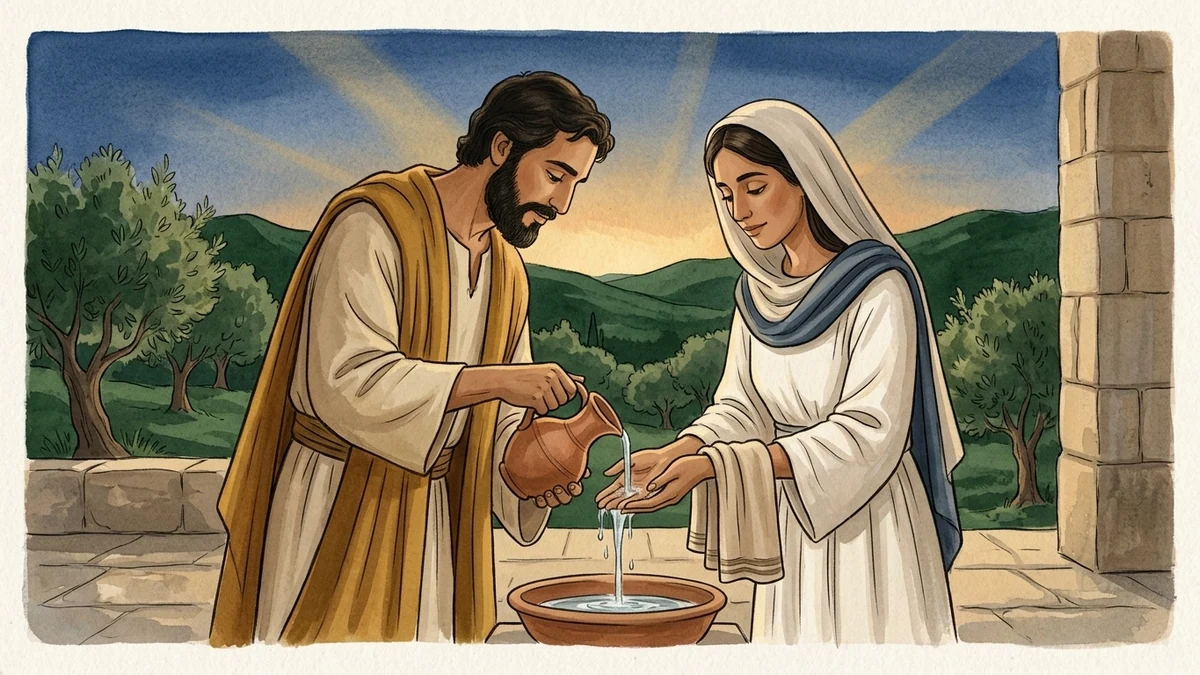
“Submit to one another out of reverence for Christ. Wives, submit to your husbands as to the Lord. For the husband is the head of the wife as Christ is the head of the church, His body, of which He is the Savior. Now as the church submits to Christ, so also wives should submit to their husbands in everything. Husbands, love your wives, just as Christ loved the church and gave Himself up for her”, Ephesians 5:21-25 (Berean Standard Bible, BSB)
When home turns into a contest
There is a quiet tension that creeps into even well-meaning marriages: the need to have the final word. It shows up in major choices like monthly budgets or parenting, yet just as often in tiny habits like the right way to load the dishwasher, when to leave the house, or who worked harder all week. Without noticing the shift, husband and wife stop acting as teammates and start defending territory.
Once the struggle for control walks through the front door, intimacy slips out the back. Every conversation feels like a debate where yielding looks like weakness. The spouse who feels constantly corrected shuts down; the one trying to manage everything ends up exhausted and lonely. Into that ordinary human friction, Ephesians 5:21-25 brings clear direction for the family.
The spiritual architecture of Ephesians 5
To read Ephesians 5:21-25 accurately, we have to trace its original flow. Ephesians 5 contains 33 verses, and starting at verse 18, Paul urges believers: “be filled with the Spirit.” He then lists four visible marks of a Spirit-filled life: speaking to one another in psalms, singing to the Lord, giving thanks in all things, and in verse 21, submitting to one another out of reverence for Christ.
That connection changes everything. Christian submission does not grow out of fear, inferiority, or cultural pressure; it grows out of reverence for Jesus and the fullness of the Spirit. In the Roman world of Paul’s day, the head of a household held near-absolute authority over wife, children, and servants, with no moral obligation to sacrifice himself for them. The Gospel turns that worldly hierarchy upside down.
When addressing wives (vv. 22-24), Paul is never endorsing abuse, personal erasure, or blind obedience to sin. He invites the Christian wife to honor her husband willingly as an expression of devotion to the Lord, embracing the ordered structure God designed for the marriage covenant.
Yet the heaviest standard falls squarely on the husband in verse 25. Paul does not write “husbands, demand respect” or “husbands, rule the house.” He commands: love your wives, just as Christ loved the church and gave Himself up for her. A husband’s pattern is not an impatient boss or a distant patriarch; his pattern is the crucified Savior. Loving like Christ requires dying daily to stubbornness, harsh speech, and self-indulgence.
Verse 26 reveals the goal of that sacrificial love:
“to sanctify her, cleansing her by the washing with water through the word,”, Ephesians 5:26 (Berean Standard Bible, BSB)
Christ’s word inside a marriage is not meant to accuse or bruise, but to wash, heal, and help the other person flourish. A husband who leads according to Ephesians 5 creates an atmosphere where his wife feels safe, heard, and cherished. And a wife who responds to that care discovers that walking in unity is not a loss of dignity, but shared strength.
Disarming competition under your roof
Laying down the struggle for control takes deliberate practice, because natural pride resists until the end. A few concrete habits bring the truth of Ephesians 5:21-25 to the dinner table and into hard conversations.
1. Ask who is being served by your tone
In the middle of a disagreement, pause long enough to check your real goal. Are you trying to solve a problem for the good of your home, or merely proving that your method is superior? When mutual care becomes the target, the volume of the conversation drops right away.
2. Practice yielding first in small matters
Many draining arguments erupt over personal preferences that carry zero moral weight. Choosing to yield freely in a minor household detail is a tangible way to live out the mutual submission of verse 21. Someone who yields out of love for Christ does not lose authority; they gain peace.
3. Trade scorekeeping for sacrificial initiative
When your spouse feels distant or defensive, resist the urge to match their coldness. Take the first step in service: listen without interrupting, own where you spoke harshly yesterday, and ask forgiveness without tacking a “but” onto the end of your apology.
4. Remember the covenant before God
Christian marriage points beyond the temporary comfort of two individuals; it is a living portrait of Christ’s faithfulness to His Church. Remembering that both of you stand under the same grace and need the same mercy strips rivalry of its fuel.
Couple’s conversation and prayer guide (18 minutes)
Set aside a quiet window tonight, away from phones and unfinished chores, to meditate on this passage together.
- Reading aloud (5 minutes): Read Ephesians 5:18-27 slowly. Notice how being filled with the Spirit in verse 18 prepares the heart for the humility described in the verses that follow.
- Honest conversation (8 minutes): Without pointing out each other’s faults, each spouse shares one recent moment where they noticed themselves trying to control a conversation or force their own preference.
- Covenant prayer (5 minutes): Hold hands, thank God for your marriage, and ask for grace to replace any competition with respect and mutual service this week.
Questions for personal or marital reflection
- In which everyday areas (finances, schedules, parenting, or household chores) do power struggles surface most often between us?
- How do you usually respond when you realize you are wrong mid-argument: do you dig in to avoid looking weak, or can you admit the mistake humbly?
- For husbands: in what practical way can you show Christ’s sacrificial love this week by placing your wife’s needs ahead of your own rest?
- For wives: in what area of daily life could willing respect and encouraging words strengthen unity and peace in your home?
Frequently Asked Questions (FAQ)
Why does Ephesians 5:21 speak of submitting to one another before addressing wives and husbands?
In the original text, verse 21 closes the list of results from being filled with the Holy Spirit (Ephesians 5:18-21) and serves as the doorway into every household relationship that follows. Before addressing specific roles, Paul establishes the shared posture of every Christian: humility and mutual service out of reverence for Christ.
What does the command to husbands in Ephesians 5:25 mean in practice?
It means biblical leadership at home is never selfish dominance or authoritarian control. The standard required of a husband is the cross of Christ: loving his wife enough to lay down personal comfort, listen to her burdens, and guard her spiritual and emotional well-being.
How can a couple stop power struggles over being right at home?
Begin by recognizing that winning an argument while wounding your spouse is a loss for both. In tense moments, call a brief pause, pray together even for thirty seconds, and ask how you can face the issue as allies.