
Genesis 27: Deception in Isaac's Tent: Why the Shortcut of Lying Hurts the Family
Bible study of Genesis 27 for parents to teach children with practical lessons, playful activities, and family devotional questions.
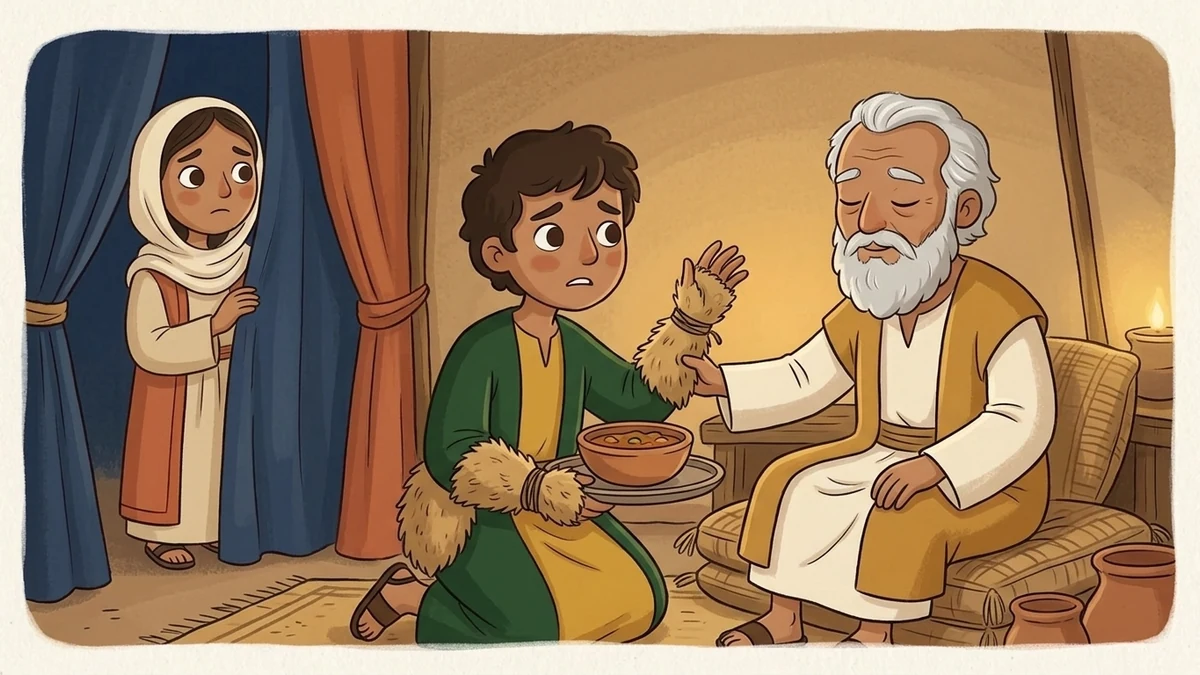
“When Isaac was old and his eyes were so weak that he could no longer see, he called his older son Esau and said to him, “My son.” “Here I am,” Esau replied. […] So Jacob went to his father and said, “My father.” “Here I am!” he answered. “Which one are you, my son?” […] Jacob said to his father, “I am Esau, your firstborn. I have done as you told me. Please sit up and eat some of my game, so that you may bless me.” […] When Esau heard his father’s words, he let out a loud and bitter cry and said to his father, “Bless me too, O my father!” […] But Isaac replied, “Your brother came deceitfully and took your blessing.” […] Esau held a grudge against Jacob because of the blessing his father had given him. And Esau said in his heart, “The days of mourning for my father are at hand; then I will kill my brother Jacob.””, Genesis 27:1, 18, 19, 34, 35, 41 (Berean Standard Bible, BSB)
Children’s Metaphor to Explain Genesis 27: The Painted Cardboard Bridge and the Paper Mask
Imagine sitting at the craft table drawing a sturdy wooden bridge across a roaring river on thick ivory paper. In a picture, the brown lines look strong enough to hold a whole family. Yet if someone wanted a shortcut across a real stream and laid painted cardboard over the water instead of walking down to the real bridge, the shortcut would look clever for two seconds before collapsing into a cold splash!
Now picture holding a smiling paper mask in front of your face so nobody recognizes you. Behind a mask, your arms grow tired, your heart pounds in fear of slipping up, and nobody can truly know or trust you. Dishonest shortcuts work just like painted cardboard and paper masks: they promise an easy win, yet tear apart trust inside a family. That sobering lesson stands at the center of Genesis 27.
The Story of Genesis 27 Explained for Children: Deception in Isaac’s Tent: Why the Shortcut of Lying Hurts the Family
Many years had passed since the twins were born, and Isaac had grown old and lost his sight. Sensing that he might not live much longer, he called his older son Esau and asked him to take his bow and quiver out to the field, hunt fresh game, and cook his favorite meal so he could give Esau his solemn father’s blessing.
“Rebekah said to her son Jacob, “Behold, I overheard your father saying to your brother Esau,”, Genesis 27:6 (Berean Standard Bible, BSB)
Remember what God had already spoken to Rebekah before the twins were born in Genesis 25? The Lord had declared that His promise would move through Jacob. God had not forgotten His word! Still, fear crowded out patience in Rebekah’s heart. Instead of praying or speaking honestly with Isaac, she hurried to build a secret plan.
She instructed Jacob to fetch two young goats so she could cook savory food Isaac loved. Then she took Esau’s best outdoor clothes from inside the tent, dressed Jacob in them, and wrapped hairy goatskins around Jacob’s smooth hands and neck so he would feel just like his rugged brother.
Jacob hesitated for a moment, worried about getting caught, yet stepped into his blind father’s tent carrying bread and warm stew. When Isaac asked, “Which one are you, my son?” Jacob lied directly: “I am Esau, your firstborn.” When Isaac wondered how the hunt had succeeded so fast, Jacob even dragged God’s name into the lie!
Suspicious, Isaac asked Jacob to step close so he could touch his hands. Feeling the hairy goatskins, Isaac whispered words filled with confusion: “The voice is the voice of Jacob, but the hands are the hands of Esau.” Isaac ate, kissed his son, smelled the scent of the open fields clinging to Esau’s garments, and spoke the blessing of harvest and leadership over Jacob.
Moments after Jacob slipped outside, Esau walked in carrying his own bowl of stew. When Isaac realized what had happened, he trembled violently. Esau let out a loud, heartbreaking cry: “Bless me too, O my father!” The shortcut had worked for five minutes, yet left unbearable pain behind. Esau grew bitter and vowed to kill Jacob after Isaac’s funeral. Terrified of losing both sons, Rebekah sent Jacob rushing away to her brother Laban in Haran, fracturing the household for years. Scripture never records Rebekah seeing Jacob again.
Even after such brokenness, God’s mercy still shines ahead in Scripture. Years later, the Lord humbled Jacob, softened Esau’s anger into tears of forgiveness, and ultimately sent Jesus, the faithful Son who spoke only truth, to heal broken hearts and restore trust in our homes.
Bible Curiosity to Share with Kids (Genesis 27): Chapter 27 has 46 verses and shows Isaac testing four different senses inside the tent: he listened to Jacob’s voice, felt the goatskins on his hands, tasted the stew, and smelled Esau’s garments. Human eyes and hands can be tricked, yet God always sees straight into our hearts.
(Pause and ask your kids: “After Jacob left the tent with a stolen blessing, do you think he felt peaceful and glad, or nervous and scared inside?”)
How to Explain for Each Age (Guide for Parents)
-
For Little Ones (Ages 3 to 6): Talk gently about Jacob wearing someone else’s clothes and furry skins to pretend he was his brother. Ask: “Does Jesus need us to make up stories so He can take care of us?” Assure your child that even when telling the truth about a broken cup or mistake gives a tummy flutter, Mommy and Daddy are always safer to tell than hiding behind a pretend story.
-
For Older Kids (Ages 7 to 12): Discuss everyday “shortcuts” at school and home: copying homework answers, hiding a poor test grade, or blaming a sibling to avoid trouble. Notice how Rebekah and Jacob tried to “help” God’s promise along through dishonesty. God’s good plans never need our cheating to come true.
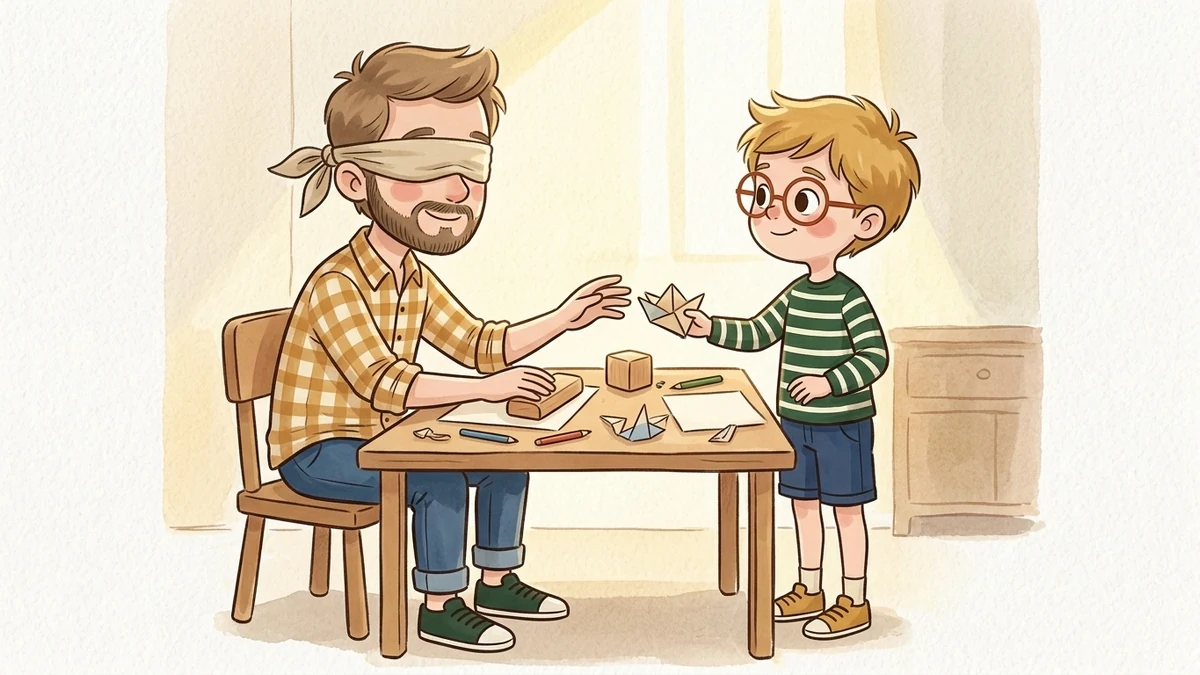
Quick 5-Minute Family Bible Activity on Genesis 27: The Blindfold Trust Game
- What you will need: A scarf or sleep mask and three ordinary household objects (such as a wooden spoon, a sheet of ivory drawing paper, and a fuzzy sock).
- How to do it:
- Gently cover one person’s eyes for one minute so they experience relying on touch and sound just like Isaac in his tent.
- Hand them the three objects one by one to guess by feel alone.
- Take off the blindfold and talk together: when parents cannot see every corner of our day at school or in the bedroom, our honest word is what keeps trust strong at home.
How to Apply the Teaching of Genesis 27 in Daily Life with Your Kids
- Praise honesty first: When a child confesses a mistake plainly without excuses, thank them warmly for telling the truth before guiding them through fixing the problem.
- Wait for God’s timing without cutting corners: Remind children during board games, chores, and schoolwork that honest effort honors Jesus far more than clever shortcuts.
- Clear the air before bedtime: Encourage everyone in the family to apologize quickly if anyone hid the truth during the day, keeping our home free from lingering grudges.
Frequently Asked Questions (FAQ)
Why was Rebekah and Jacob's plan wrong in Genesis 27 if God had already promised to bless Jacob?
Before the twins were born, God had declared that the older would serve the younger. Yet Rebekah and Jacob tried to force God's plan through disguises and direct lies inside Isaac's tent. Trusting the Lord means waiting patiently for His timing with clean, honest hearts rather than scheming.
How did Isaac try to verify which son stood before him in Genesis 27?
Because his eyes could no longer see, Isaac relied on four other senses. He listened carefully to Jacob's familiar voice, felt his hands and neck covered in hairy goatskins, tasted the savory stew, and smelled Esau's outdoor garments before giving the blessing. Still, deceit fooled his senses.
What painful consequences followed the deception inside Isaac's family in Genesis 27?
When Esau realized his blessing had been stolen, he wept bitterly and vowed to kill his brother after their father passed away. Fearing for Jacob's life, Rebekah sent him far away to her brother Laban in Haran, splitting the family apart for many long and lonely years.