
Peace I Leave with You, My Peace I Give to You: Let Not Your Heart Be Troubled
In-depth Bible study on John 14:27-28 about the peace of Christ amid sudden bad news, instability, and fear of the future at home.
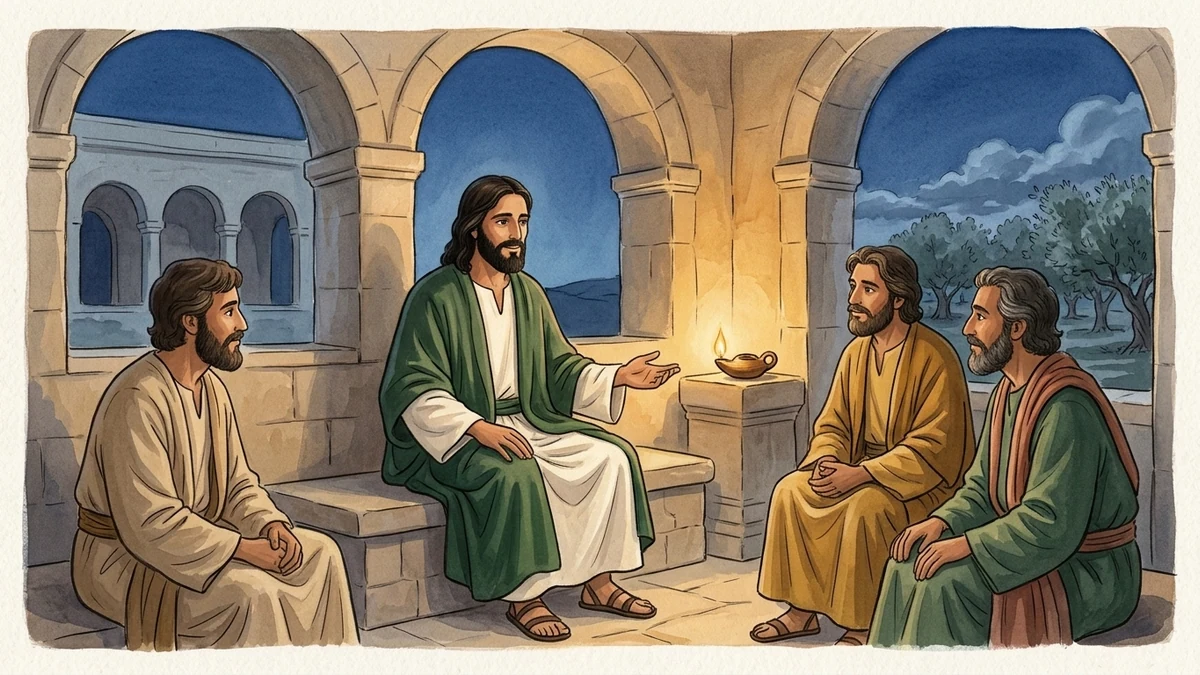
“Peace I leave with you; My peace I give to you. I do not give to you as the world gives. Do not let your hearts be troubled; do not be afraid. You heard Me say, ‘I am going away, and I am coming back to you.’ If you loved Me, you would rejoice that I am going to the Father, because the Father is greater than I.”, John 14:27-28 (Berean Standard Bible, BSB)
It takes only one late-night phone call, an unexpected medical report, or a sudden shift at work to alter the sense of safety inside a home. Minutes earlier, the week felt predictable. Suddenly the chest tightens, thoughts sprint toward worst-case scenarios, and the quiet living room feels heavy. Faith feels straightforward when bills are covered and everyone sleeps soundly; the real test arrives when instability catches the heart off guard.
In those hours, even kind advice can sound hollow. Telling a frightened parent or spouse to simply stay calm rarely helps, because human calm depends on external guarantees to stay upright. The promise in John 14:27-28, however, was not spoken on a pleasant afternoon by the lake. It was delivered on the tensest night of Jesus’ ministry, to men who had just heard that their Master was leaving and that one of their own was about to betray Him.
The night the disciples’ world shook
To grasp the weight of John 14:27-28, we have to step into the upper room on the eve of the crucifixion. Nothing about that supper was tranquil. In chapter 13, Jesus washed the disciples’ feet, announced that one of the twelve would hand Him over, and watched Judas walk out into the night (John 13:30). Moments later, He told Peter that before the rooster crowed, Peter would deny Him three times (John 13:38). Right alongside those shocks, Jesus warned them that He was going where they could not follow yet (John 13:33).
For those eleven men, Jesus was their entire center of gravity. They had left fishing boats, tax booths, and extended households to follow Him. Being left alone in Jerusalem, surrounded by hostile religious authorities and Roman soldiers, meant the collapse of every expectation they held. Chapter 14 opens directly with Jesus addressing the visible panic around the table: “Do not let your hearts be troubled. You believe in God; believe in Me as well” (John 14:1).
Across the chapter, the Lord explains where He is going, promises He will not leave them as orphans, and announces the coming of another Helper, the Spirit of truth, who would dwell with them and be in them (John 14:16-17). When He reaches verse 27, He closes the exact same frame He opened in verse 1. That repetition places a protective bracket around the entire conversation.
A farewell that is more than a polite wish
In the ancient Jewish world, the customary parting greeting was Shalom, “peace be with you.” When we say goodbye to someone we love before a long flight or a surgery, we wish them peace, knowing full well we cannot guarantee it. Our words carry affection, not authority over outcomes.
Jesus transforms that ordinary farewell into a binding bequest. “Peace I leave with you; My peace I give to you. I do not give to you as the world gives.” Two details here anchor any family walking through uncertain days.
The first lies in the verb “leave.” In Greek, it carries the resonance of a last will and testament, something a person leaves behind to heirs. Jesus had no silver or property to distribute in that upper room, yet He left something far more durable: His own peace. The second detail lies in the word “My.” This is not generic serenity or a temporary truce. It is Christ’s personal Peace, the same steadiness with which He slept in the stern of a storm-tossed boat on Galilee and with which He would stand before the Sanhedrin and Pilate within hours.
Why the world’s peace breaks under pressure
Why does Jesus emphasize, “I do not give to you as the world gives”? In the first century, the Roman Empire boasted of the Pax Romana, a peace enforced by legions, taxation, and the suppression of unrest. Modern life still runs on the same logic: worldly peace is a byproduct of favorable conditions. We feel peaceful as long as income stays steady, test results look clean, marriage feels effortless, and no crisis interrupts the calendar.
The flaw in peace borrowed from the world is that it vanishes precisely when it is needed most. One difficult headline or phone call can dissolve it before dinner.
Jesus’ peace works from the inside out. It never denies grief or numbs real emotion, yet it grows out of permanent reconciliation with God. If humanity’s deepest rift, separation from God and the fear of death, was settled by Christ on the cross, no earthly setback holds the final word over someone who belongs to Him. The world offers calm built on the illusion of control; Jesus gives peace built on His presence and triumph.
Two Greek verbs that map human fear
Right after handing over this inheritance, Jesus speaks two commands filled with both tenderness and resolve: “Do not let your hearts be troubled; do not be afraid.”
The two Greek verbs John records capture distinct layers of how we react to crisis. The first verb (tarasso, “troubled”) pictured water churned up by violent winds or a crowd thrown into uproar. It describes the immediate jolt when troubling news lands: the pulse races, thoughts scatter, and the whole household feels knocked off balance.
The second verb (deiliao, “afraid”) appears only this once in the entire New Testament. It refers to shrinking back in timidity, the paralyzing dread that makes a person retreat, hide, or abandon faithfulness when threat appears. Jesus knows the initial shock will knock at the door, yet He calls His followers not to surrender the steering wheel of their hearts to either inner turmoil or cowardly retreat.
The hidden joy in Jesus’ departure
Verse 28 often raises two honest questions for careful readers. First, why would the disciples rejoice that Jesus was leaving if His physical presence was their greatest comfort? Second, what does “because the Father is greater than I” mean?
On the first question, the disciples’ love for Jesus was genuine, though still tied to their immediate need for visible security. They wanted to keep Him within arm’s reach. Jesus points out that mature love for Him would rejoice to see His mission completed and His glory restored. Moreover, as He explains in chapter 16, returning to the Father was the necessary step before the Holy Spirit was poured out, making Christ’s presence closer and wider than a single hillside in Judea could ever allow.
On the phrase “the Father is greater than I,” Jesus is certainly not contradicting what He stated minutes earlier in the same room: “Anyone who has seen Me has seen the Father” (John 14:9) and “I am in the Father and the Father is in Me” (John 14:11). In biblical theology, the Son shares full divine nature with the Father, yet in the incarnation He willingly took the posture of a servant, accepting hunger, fatigue, geographic limits, and death on a cross. Comparing His humbled state on that dark night in Jerusalem with the Father’s unveiled majesty in heaven, Jesus reminds His friends that He is returning to sovereign authority. A King seated on the throne holds greater resources to sustain His household than a teacher walking under arrest in Jerusalem.
Strengthened before the storm arrives
The next verse completes Jesus’ pastoral purpose and explains why He spoke so plainly before Gethsemane:
“And now I have told you before it happens, so that when it does happen, you will believe.”, John 14:29 (Berean Standard Bible, BSB)
Jesus did not wait until Sunday morning after the resurrection to comfort His friends. He planted the word of peace before the garden, before the rigged trial, before the silence of Saturday. When the storm broke and everything looked lost, they would remember that the Lord had already foretold the valley and secured the outcome.
That same pattern runs across the entire Bible. Writing to Christians in Rome, the Apostle Paul reminds them why Scripture was preserved across generations:
“For everything that was written in the past was written for our instruction, so that through endurance and the encouragement of the Scriptures, we might have hope.”, Romans 15:4 (Berean Standard Bible, BSB)
We do not open John 14:27-28 only after disaster strikes. Returning to these truths on ordinary weekdays builds spiritual reserves at home, cultivating endurance, encouragement, and steady hope when the ground beneath our feet shifts.
Anchoring the home in Christ’s peace today
Living under the peace Jesus left behind does not erase grief, practical budgeting, or medical care for people we love. It transforms how a household walks through those seasons:
- Separate wise action from panic: When hard news arrives, take the responsible steps the moment requires, while refusing to replay endless worst-case scenarios around the dinner table.
- Meet the first jolt with a brief prayer: When your heart jumps at a message or phone call, pause before speaking. Pray plainly: “Lord, Your peace does not depend on calm outside; guard my heart right now.”
- Remember where Christ reigns today: Jesus did not remain in the upper room or in the tomb; He went to the Father and rules over every authority. Bring into family prayer the certainty that no domestic surprise catches God’s throne off guard.
- Guard the tone of speech at home: During unstable seasons, the voice of parents and spouses shapes the emotional climate for children. Protecting the home from sharp impatience and anxious haste is a tangible witness to Christ’s peace.
- Read Scripture before the crisis hits: Keep a simple habit of reading a short Gospel passage during ordinary weeks. That stored memory is what the Holy Spirit brings to mind on the hardest days.
Questions for reflection and family conversation
- Looking back over recent months, what has served as the thermometer of peace in your home: favorable circumstances or confidence in Christ’s presence?
- How does your household usually react in the first few hours after receiving unexpected bad news? What helps move your hearts from agitation back to steadiness?
- How does knowing that Jesus returned to the Father and sent the Holy Spirit reshape the way you view your children’s future and your home’s provision?
- Is there a postponed conversation or hidden fear at home today that needs to be brought before God together in prayer before sleep?
Frequently Asked Questions (FAQ)
What is the difference between the peace Jesus gives and the peace the world offers in John 14:27?
The world's peace is always conditional: it lasts as long as bills are paid, health holds steady, and conflict stays away. Once circumstances shift, that calm evaporates. Christ's peace flows from reconciliation with God and victory over death, remaining intact even in the middle of a storm.
What did Jesus mean by 'because the Father is greater than I' in John 14:28?
Jesus is not denying His divinity, which He affirms earlier in the same chapter in John 14:9. He is referring to His humbled earthly state in the incarnation compared with His return to heavenly glory with the Father. Knowing Christ was returning to the Father's throne should bring the disciples joy and confidence rather than despair.
Why does Jesus repeat 'Do not let your hearts be troubled' at both the start and end of John 14?
That repetition forms a deliberate frame around the entire chapter. The disciples were shaken by the announcement of Jesus' departure and impending betrayal. Jesus opens and closes the discourse with the same call to steadiness because the coming of the Holy Spirit ensured they would never be left as orphans.