
Why Are You Cast Down, O My Soul? Put Your Hope in God
Bible study on Psalms 42:5-11 about deep sadness and discouragement: learn not only to listen to inner heaviness, but to preach God's hope to your heart.
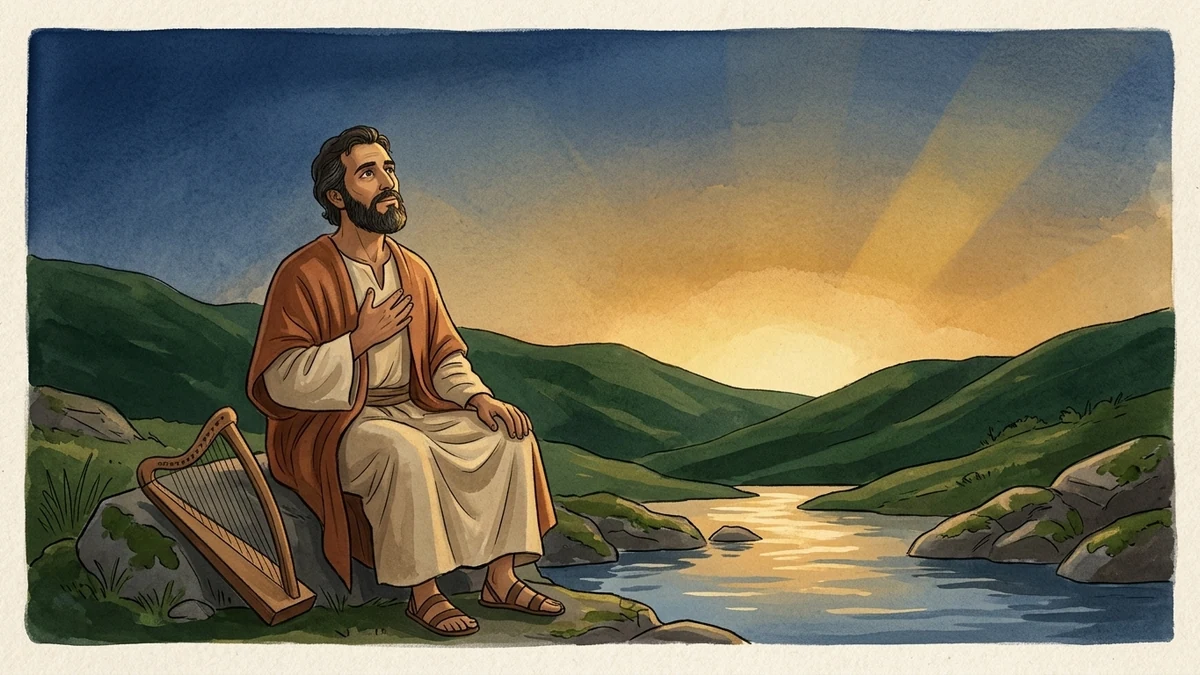
“Why are you downcast, O my soul? Why the unease within me? Put your hope in God, for I will yet praise Him for the salvation of His presence. O my God, my soul despairs within me. Therefore I remember You from the land of Jordan and the peaks of Hermon— even from Mount Mizar. Deep calls to deep in the roar of Your waterfalls; all Your breakers and waves have rolled over me. The LORD decrees His loving devotion by day, and at night His song is with me as a prayer to the God of my life. I say to God my Rock, “Why have You forgotten me? Why must I walk in sorrow because of the enemy’s oppression?” Like the crushing of my bones, my enemies taunt me, while they say to me all day long, “Where is your God?” Why are you downcast, O my soul? Why the unease within me? Put your hope in God, for I will yet praise Him, my Savior and my God.”, Psalms 42:5-11 (Berean Standard Bible, BSB)
There are mornings when your eyes open, household chores wait in the kitchen, and yet a deep heaviness sits on your chest before anything has gone wrong. No argument happened, no bad phone call arrived, and still a quiet sorrow settles in uninvited. People who love God often feel ashamed of that gloom and try to mask it around their family so they will not appear ungrateful or spiritually weak.
Psalm 42 dismantles that guilty silence. It belonged to Israel’s official hymnal, sung in public worship, and was written by the sons of Korah, Levites trained to lead praise in the temple. Even someone devoted to worship knew what it felt like to be knocked flat by wave after wave of sorrow.
Far from home amid roaring waters
The psalmist writes from exile or forced distance from Jerusalem, naming “the land of Jordan and the peaks of Hermon, even from Mount Mizar” (v. 6). In Israel’s far north, snowmelt from Mount Hermon feeds rushing waterfalls that pour into the Jordan River. Listening to that thunderous water, the writer finds an honest picture of what is happening inside him: “Deep calls to deep in the roar of Your waterfalls; all Your breakers and waves have rolled over me.”
Discouragement rarely arrives as a single neat wave. It tends to come in sets, wearing down the mind until it feels as though God has stepped away. Worse still, voices inside and outside press on the bruise: “Where is your God?” (v. 10). When sadness lingers for weeks, doubt whispers that faith has accomplished nothing.
The courage to talk back to your own soul
The turning point of Psalm 42 is not an immediate change in scenery, but a change in who is speaking. Through verse 4, the psalmist mostly reacts to his pain, feeding on tears day and night. In verse 5, however, he turns directly toward his inner life and asks two probing questions: “Why are you downcast, O my soul? Why the unease within me? Put your hope in God, for I will yet praise Him for the salvation of His presence.”
That posture holds a vital pastoral lesson. On heavy days, our own heart talks nonstop, repeating that nothing will improve and that we are alone. If we only sit back and listen to those thoughts, we sink deeper. The psalmist teaches us to interrupt sorrow’s monologue and speak God’s truth in prayer back to our own hearts. He never denies his gloom (in verse 6 he confesses plainly, “O my God, my soul despairs within me”), yet he refuses to hand gloom the final word.
Notice too that the refrain returns in verse 11 (and again in Psalm 43:5, which originally formed one poem with Psalm 42). Repetition proves that relief is not always instant. Preaching hope to your own soul is often a practice repeated morning, afternoon, and night.
Right at the chapter’s opening, the writer had already named the thirst beneath his ache:
“For the choirmaster. A Maskil of the sons of Korah. As the deer pants for streams of water, so my soul longs after You, O God.”, Psalms 42:1 (Berean Standard Bible, BSB)
Gentle steps for heavy mornings
When unexplained heaviness visits your home, Psalm 42 points to steady, compassionate habits:
- Tell God the truth before pretending strength: Speak plainly to the Lord about how your chest feels today without spiritual polish. If you need to ask, “Why have You forgotten me?”, bring that question straight to God as the psalmist did.
- Answer dark thoughts with the psalm’s refrain: When your mind insists that nothing makes sense, interrupt the loop aloud or quietly: “Put your hope in God, for I will yet praise Him.”
- Stay connected to people and practical care: The psalmist missed walking with the crowd to worship (v. 4). Do not spend gray weeks isolated in your room; talk with your spouse, a trusted friend, or a pastor, and care for physical rest as well.
Questions for reflection
- When discouragement arrives without a clear trigger, do you tend to hide it out of embarrassment or bring it honestly before God?
- Which repetitive thoughts have spoken loudest in your mind lately, and what promise from Scripture needs to answer them today?
- How can your household welcome someone walking through a heavy day, offering patient listening instead of demanding instant cheerfulness?
Frequently Asked Questions (FAQ)
Does Psalm 42 condemn believers who experience deep sadness?
No. Psalm 42 was written by Levites devoted to temple worship, proving that faithful people also walk through seasons of deep gloom. Scripture validates honest sorrow and teaches us to bring that weight into prayer rather than hiding it out of guilt.
Why does the refrain 'Why are you downcast, O my soul?' appear twice in Psalm 42?
The repetition in verses 5 and 11 shows that discouragement rarely lifts after a single prayer. The psalmist has to address his own soul again and again, reminding us that Christian hope grows through patient perseverance.
What does the imagery of waterfalls, breakers, and waves mean in Psalm 42:7?
Exiled near the headwaters of the Jordan and Mount Hermon, the psalmist uses the roar of mountain rapids to describe the feeling of being struck by relentless waves of sorrow, one right after another.