
Come to Me, All You Who Are Weary and Burdened, and I Will Give You Rest
In-depth Bible study on Matthew 11:28-29 about discouragement and exhaustion: discover the meaning of Christ's gentle yoke and find real rest for your soul.
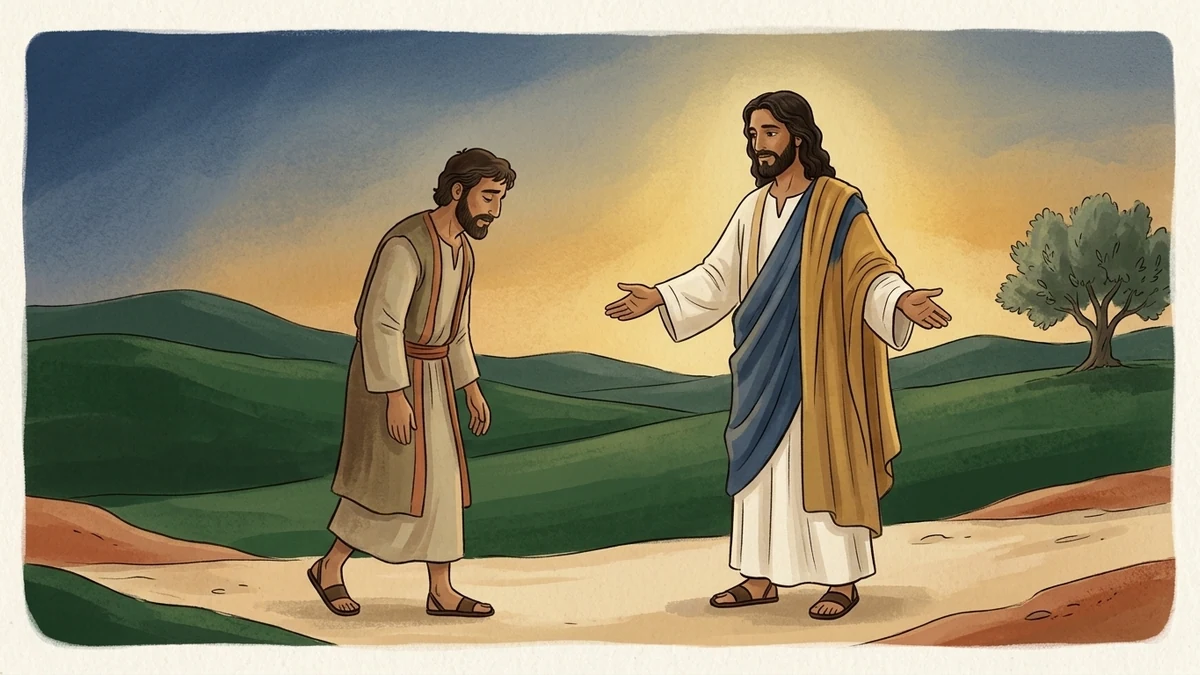
“Come to Me, all you who are weary and burdened, and I will give you rest. Take My yoke upon you and learn from Me; for I am gentle and humble in heart, and you will find rest for your souls.”, Matthew 11:28-29 (Berean Standard Bible, BSB)
When exhaustion settles deeper than the body
There is a kind of fatigue that does not lift after a long weekend, and no amount of extra sleep seems to touch it. It is the weariness of a soul that wakes up already feeling behind, looking at the demands of home, work, bills, and parenting with a quiet sense of dread. Many households live for months in this state: keeping appointments, answering messages, holding responsibilities together on the outside while growing dry, irritable, and depleted on the inside.
What makes this exhaustion heavier is the guilt that often tags along with it. People who love God frequently feel ashamed to admit how tired they are, as if emotional depletion were proof of spiritual failure. So they add one more weight to shoulders already bent: on top of caring for aging parents, raising children, or navigating unspoken tension in a marriage, they feel pressure to project constant spiritual strength. Faith turned into performance quietly turns the gospel itself into another item on an impossible checklist.
Into that exact place of depletion, Matthew 11:28-29 speaks with disarming tenderness. Jesus does not begin by telling exhausted people to fix their habits, organize their schedules, or muster up greater willpower. He addresses those who are “weary” (worn down by relentless effort) and “burdened” (weighed down by loads placed on them by others or by themselves). Christ’s invitation is not a reward for the resilient; it is an open door for those who can no longer pretend they are fine.
In a home wrestling with discouragement or seeking peace amidst the storms, hearing this voice changes the air in the room. When spouses or parents and children stop demanding superhuman stamina from one another and turn together toward Jesus, honesty becomes safe again. Scripture neither romanticizes burnout nor shames us for feeling it. Instead, the Lord calls us by name and invites us to step out of self-reliance.
The dramatic setting of Matthew 11
To appreciate the weight of these words, we need to see what unfolds across Matthew 11 before verse 28 arrives. This chapter does not take place in a moment of easy triumph; it captures some of the heaviest, most misunderstood hours of Jesus’ public ministry.
At the start of the chapter, John the Baptist, the fearless prophet who prepared the Messiah’s way, sits locked inside Herod’s fortress at Machaerus. Months in prison shake even John’s certainty, and he sends disciples to ask Jesus whether He is truly the Coming One or if they should look for someone else. Jesus answers patiently, pointing to the tangible signs of God’s mercy unfolding in plain sight: the blind see, the lame walk, lepers are cleansed, and the poor hear good news.
Soon after, the tone shifts. Jesus confronts a restless generation that rejected both John’s austerity and the Son of Man’s compassion. He then pronounces solemn woes over Chorazin, Bethsaida, and Capernaum, Galilean towns that witnessed most of His miracles yet refused to repent. Surrounded by spiritual indifference and mounting opposition, any human teacher might have grown bitter or withdrawn.
Instead, in verses 25 through 27, Jesus lifts His eyes to the Father in grateful prayer, thanking God for hiding the mysteries of the Kingdom from the “wise and learned” and revealing them to “little children.” Immediately after that intimate prayer with the Father, He turns toward the worn-out crowd and speaks the invitation that has anchored believers for two millennia: “Come to Me, all you who are weary and burdened, and I will give you rest.”
First-century listeners felt the contrast immediately. The religious teachers of the day had layered hundreds of oral traditions and legal fences around the Law of Moses, leaving ordinary working people under a constant cloud of inadequacy. Later in Matthew’s Gospel, Jesus would rebuke those leaders directly for tying up “heavy, burdensome loads” and laying them on people’s shoulders without lifting a finger to help (Matthew 23:4). By calling the crowd to Himself, Jesus offers a radical alternative both to oppressive religion and to the exhausting grind of carrying life alone.
The three movements: coming: taking the yoke: and learning
Reading Matthew 11:28-29 slowly reveals three connected movements that should never be pulled apart.
The first movement is coming: “Come to Me, all you who are weary and burdened, and I will give you rest.” Notice that Jesus does not point to a technique, a seminar, or a stricter set of rules. He points to Himself. Rest begins in personal trust. An immediate relief takes place when we stop trying to earn God’s approval through frantic effort and bring our tired, empty hands directly to Christ.
The second movement surprises anyone who assumes rest means having nothing to do: “Take My yoke upon you.” In ancient farming across Galilee, a yoke was a carved wooden beam fitted across the necks of two oxen so they could pull a plow together. A skilled carpenter, the trade Jesus Himself practiced in Nazareth, knew that a poorly shaped yoke chafed the animal’s neck and made every furrow agonizing, while a well-fitted yoke distributed the strain and kept the team moving steadily.
By inviting us to take His yoke, Jesus makes clear that following Him still involves real work, calling, family care, and daily faithfulness. The decisive change is that we are no longer pulling the plow alone. Taking Christ’s yoke means walking side by side with Him, matching His pace, accepting His direction, and letting Him bear the decisive weight when the ground turns steep.
The third movement is learning: “and learn from Me; for I am gentle and humble in heart, and you will find rest for your souls.” Notice the subtle shift in the text. In verse 28, rest is a gift granted at once (“I will give you rest”); in verse 29, rest is discovered progressively through discipleship (“you will find rest for your souls”). That second phrase echoes Jeremiah 6:16, where God urges His people to ask for the ancient paths, walk in the good way, and find rest for their souls.
And what do we learn in Jesus’ school? He highlights only two traits of His character: gentleness and humility of heart. Across all four Gospels, this is the only place where Jesus explicitly describes His own inner heart. He does not say, “Learn from Me because I am all-powerful,” even though He is. He presents Himself as gentle, refusing to crush those who are already bruised, and humble in heart, free from the pride that competes, controls, and dominates. Much of the exhaustion inside our homes flows from the exact opposite: anxious control, harsh reactions under stress, and pride that refuses to ask for help. Learning Christ’s gentleness disarms the very tensions that drain a household dry.
In the very next verse, the Lord seals this teaching with a reassuring promise:
“For My yoke is easy and My burden is light.”, Matthew 11:30 (Berean Standard Bible, BSB)
The Greek word translated “easy” (chrestos) carries the sense of well-fitting, kindly, and non-abrasive. It does not mean life becomes effortless, but that the load matches the grace God supplies. Writing to believers in Rome about why Scripture was preserved, the Apostle Paul underscores the same sustaining purpose:
“For everything that was written in the past was written for our instruction, so that through endurance and the encouragement of the Scriptures, we might have hope.”, Romans 15:4 (Berean Standard Bible, BSB)
The endurance, encouragement, and hope that hold a household steady in hard seasons do not come from forced positivity, but from staying close to the living voice of Christ.
Practicing Christ’s gentle yoke in daily home life
Bringing Matthew 11:28-29 into a Tuesday morning requires honest adjustments rather than vague inspiration. Admiring the verse while keeping the same relentless pace that breaks us down changes nothing. A few grounded practices help turn this promise into daily rhythm:
- Separate God’s calling from self-imposed pressure. Much of our burnout comes not from what God actually asked us to do, but from trying to meet external expectations, keep up with financial comparisons, or control outcomes that belong only to the Lord. Take time to name what is genuinely your responsibility today (loving your household, working with integrity, praying) and release the illegitimate weight of anxious control.
- Protect a weekly rhythm of unhurried rest and conversation. Jesus’ yoke respects creaturely limits. God built rest into creation because human beings were never designed to run without pause. Setting aside a regular block of time each week to silence notifications, share a meal without rushing, and talk without a problem-solving agenda is a tangible way of trusting God’s provision over endless productivity.
- Respond to household fatigue with gentleness instead of sharpness. When everyone under one roof is tired, small oversights quickly spark disproportionate arguments. Learning from the One who is “gentle and humble in heart” means meeting a spouse’s or child’s exhaustion with patience and listening rather than adding another layer of criticism.
- End the day with honest surrender in prayer. Before turning out the light, instead of replaying every unfinished task in your mind, speak your worries plainly to God. Naming what steals your sleep is the simplest way to accept His invitation: “Come to Me.”
Questions for personal or couple reflection
- In which area of my life or our home have I been living as though everything depends solely on my own stamina, rather than walking at Jesus’ pace?
- What burdens of guilt, perfectionism, or comparison have we carried lately that do not match the gentle yoke described in Matthew 11:30?
- How could Christ’s gentleness and humility of heart reshape the way we speak to one another when we are worn out at the end of the day?
- What concrete adjustment in our weekly schedule would create space to listen to Scripture and rest together without hurry?
Frequently Asked Questions (FAQ)
What did Jesus mean by 'Take My yoke upon you' in Matthew 11:29?
In the ancient agricultural world, a yoke was a wooden beam joining two oxen so they could pull a plow together, sharing the load. By inviting weary people to take His yoke, Jesus does not promise an idle life; He offers a shared walk in which He bears the decisive weight and teaches a steadier rhythm shaped by gentleness.
What is the difference between the rest in verse 28 and the rest in verse 29?
In verse 28, Jesus promises 'I will give you rest,' pointing to the immediate gift of relief received when a weary person comes to Him in faith. In verse 29, He adds 'and you will find rest for your souls,' pointing to a deeper, ongoing peace learned by walking daily with Christ and adopting His humble way of life.
Why does Matthew 11:28-29 appear right after Jesus rebukes the towns of Galilee?
Earlier in Matthew 11, Jesus addresses John the Baptist's doubts from prison and laments the stubbornness of Chorazin, Bethsaida, and Capernaum. Right after thanking the Father for revealing the Kingdom to 'little children,' He extends this invitation to the weary, showing that God's grace belongs not to the self-sufficient, but to those who admit their need.