
The Lord Is Good to Those Who Wait for Him, to the Soul Who Seeks Him
Bible study on Lamentations 3:25-26 about waiting and patience at home. Explore the biblical context and how to cultivate quiet trust in God.
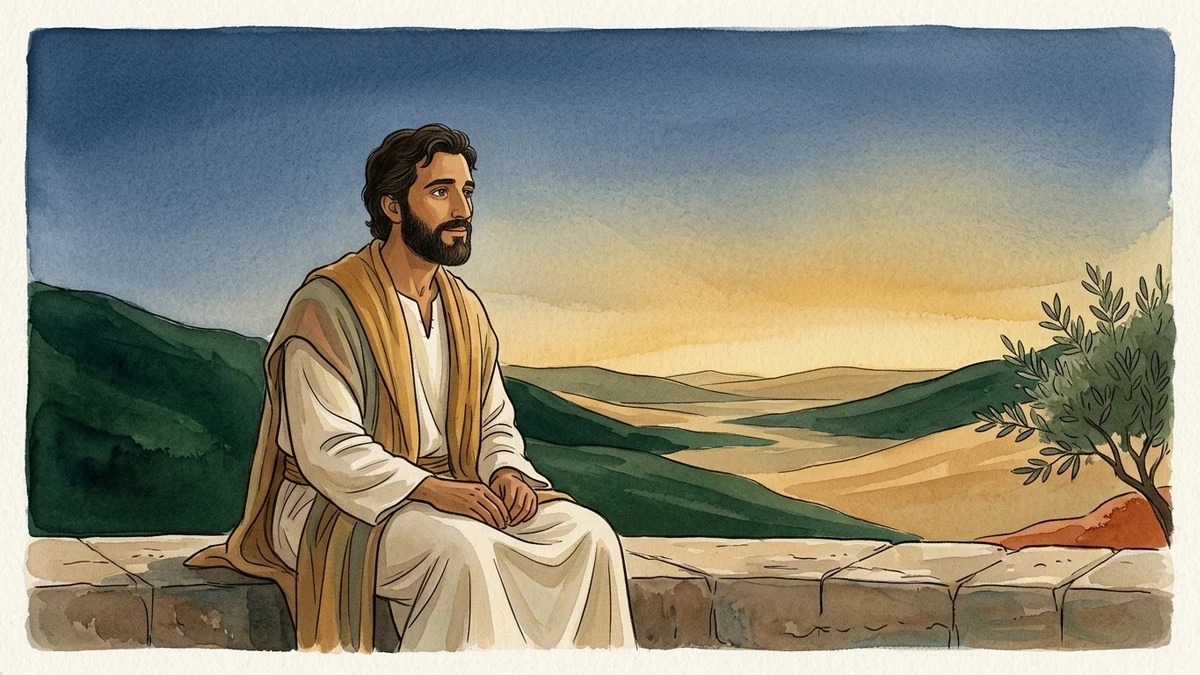
“The LORD is good to those who wait for Him, to the soul who seeks Him. It is good to wait quietly for the salvation of the LORD.”, Lamentations 3:25-26 (Berean Standard Bible, BSB)
Few experiences wear down the human heart like the gap between a sincere prayer and a visible answer. We live surrounded by tight deadlines, instant replies, and a culture that treats slowness as failure. When that pace enters a family, waiting stops being just a stretch on the calendar and starts weighing down the whole house. You feel it in tense conversations over a budget that still will not balance, in the delay of a medical result, in a job search that drags on, or in a child’s slow change of heart.
The danger of those intervals lies not only in fatigue, but in the temptation to grab the steering wheel by force. We want quick closure, shorter detours, and faster outcomes for processes that belong strictly to God’s timing. Right at that point of restlessness, Lamentations 3:25-26 offers a sober and deeply pastoral word. It never promises that the clock will speed up; instead, it reshapes our posture while the hands keep moving.
Hope spoken from the ashes
To hear the real weight of these two verses, we have to remember where they were written. The book of Lamentations did not come out of a comfortable palace during years of prosperity. It was composed amid the ruins of Jerusalem after the Babylonian destruction of the city in 586 BC. Streets lay empty, the temple had burned, and survivors faced grief, hunger, and exile.
In the first twenty verses of chapter 3, the writer describes his anguish without filters. He speaks of darkness, broken bones, and prayers that seem blocked from reaching heaven. There is no attempt to minimize the loss. The turning point arrives only in verse 21, when he deliberately calls to mind what gives him hope: the steadfast love of the Lord never ceases, and His mercies are new every morning.
Immediately after that confession come verses 25 through 27. In Hebrew, the entire chapter is a triple acrostic poem, where each group of three verses begins with a successive letter of the alphabet. Verses 25, 26, and 27 belong to the letter Teth, and all three open with the same Hebrew word, tov, meaning “good.” Standing in the rubble, the sacred poet repeats three times what truly remains good:
“It is good for a man to bear the yoke while he is still young.”, Lamentations 3:27 (Berean Standard Bible, BSB)
That threefold statement reveals a mature theology of waiting. First, it anchors us in who God is: “The LORD is good to those who wait for Him, to the soul who seeks Him.” Goodness does not reside in the painful circumstance, but in the character of the One we trust. Notice how waiting and seeking belong together. In Scripture, waiting on God never means folding our arms in apathy; it means continuing to seek His face and staying in communion even when results have not yet appeared.
Second, verse 26 declares that this quiet posture has value in itself: “It is good to wait quietly for the salvation of the LORD.” Waiting quietly does not mean pretending there are no tears; it means quieting the inner quarrel with God. When we stop demanding immediate explanations and stop manufacturing human escapes, we leave room for the deliverance only the Lord can bring. Finally, verse 27 completes the picture by reminding us that bearing the yoke early shapes character. Prolonged waiting often functions like that yoke: it disciplines us, strips away self-sufficiency, and builds a faith that holds steady in the storm.
When hurry walks through the front door
In household life, impatience rarely stays contained inside one person. When a husband or wife grows anxious over an unanswered need, voices sharpen, listening shortens, and minor domestic inconveniences turn into major friction. Hurry makes us brittle. It also leaves us vulnerable to poor choices: taking on debt to force a lifestyle ahead of time, making sudden changes out of panic, or speaking harshly to children because we want instant spiritual or emotional maturity.
Learning to wait according to Lamentations 3:25-26 requires separating responsibility from control. Responsibility means doing with diligence what lies within our reach today: working honestly, caring for our health, speaking with grace, guiding our children consistently, and praying steadily. Control means demanding to dictate the outcome and the deadline. When we carry our responsibility and hand control back to God, the atmosphere at home begins to breathe again.
It also matters what feeds our minds while we wait quietly for the salvation of the Lord. If we spend our evenings comparing our timeline with other families or rehearsing worst-case scenarios before sleep, restlessness only deepens. Biblical calm grows when we choose to remember, just as the prophet did amid the ashes, the concrete ways God has already sustained our home in earlier seasons.
Practical ways to walk through a season of waiting
- Trade mental spiraling for intentional seeking. Whenever your thoughts circle obsessively around an unresolved problem, turn that worry into a brief prayer shaped by verse 25. Tell the Lord plainly that you choose to seek Him above the answer you are hoping to receive.
- Place a pause before major decisions. During long delays, agree with your spouse or a trusted friend on a set period of prayer and counsel before taking on financial commitments or drastic changes. Hurry often disguises anxiety as urgency.
- Quiet the habit of comparison. Refuse to measure God’s faithfulness by another household’s calendar. Every family matures under its own care, and the Father’s pace is not neglect, it is precision.
- Name the small mercies of the week. At the end of each Sunday, talk around the table about where God’s provision and peace showed up over the past seven days, even while the larger question remains open.
Questions for personal and family reflection
- In what current area of our lives do we find it hardest to wait without grumbling or trying to force an outcome?
- How has our restlessness affected the emotional tone of our home and the way we speak to one another?
- What specific memories of God’s past faithfulness can we bring to mind today to steady our hope in the present?
- Which decision or concern do we need to place consciously into the Lord’s hands tonight, choosing to wait quietly for His timing?
Frequently Asked Questions (FAQ)
What does waiting quietly mean in Lamentations 3:26?
In the context of Lamentations 3:26, waiting quietly for the salvation of the Lord means silencing grumbling and panic while refusing hasty shortcuts. It is not indifference toward pain, but confident surrender to the God who governs the timing of every answer.
Why does Lamentations 3 repeat the word 'good' in verses 25, 26, and 27?
Lamentations chapter 3 is structured as a triple Hebrew acrostic poem. Verses 25, 26, and 27 correspond to the letter Teth, and each begins with the Hebrew word 'tov' (good), emphasizing that the Lord Himself, quiet waiting, and learning to bear the yoke are all good.
How can a family practice the patience of Lamentations 3:25-26 in daily life?
A household can practice this by replacing anxious conversations with focused prayer, avoiding impulsive decisions under financial or emotional pressure, and naming concrete signs of God's daily faithfulness.