
Unless the Lord Builds the House, Its Builders Labor in Vain
Bible study on Psalms 127:1-3 about work, rest, and family harmony. Explore Solomon's Song of Ascents and how God builds a peaceful home.
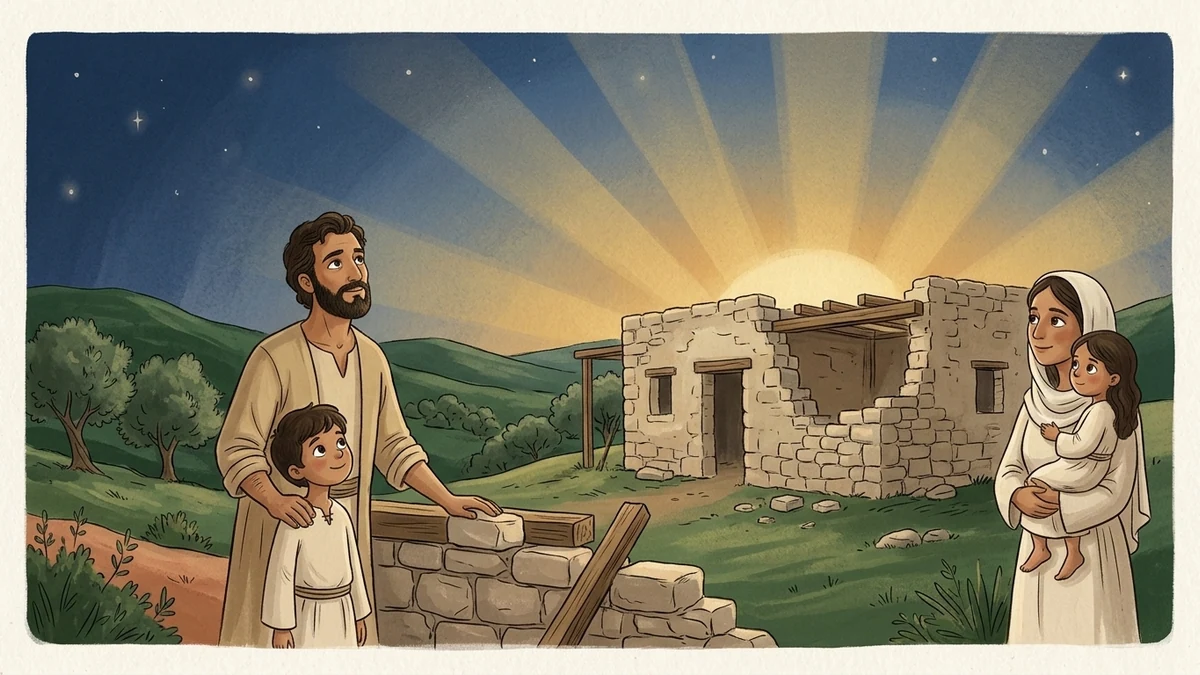
“A song of ascents. Of Solomon. Unless the LORD builds the house, its builders labor in vain; unless the LORD protects the city, its watchmen stand guard in vain. In vain you rise early and stay up late, toiling for bread to eat— for He gives sleep to His beloved. Children are indeed a heritage from the LORD, and the fruit of the womb is His reward.”, Psalms 127:1-3 (Berean Standard Bible, BSB)
There is a quiet frustration familiar to many households that look put together from the outside yet feel worn thin inside. A husband and wife wake early, keep up with demanding schedules, pay bills on time, and work hard to give their children stability. Still, when everyone finally gathers at the end of the day, what remains is short tempers, heavy silence, and the ache that peace is missing inside the very walls they worked so hard to build.
That gap exposes an uncomfortable truth: a family can have discipline, good intentions, and material structure while still building on an insufficient foundation. Psalms 127:1-3 was not written to belittle honest labor, but to dismantle the illusion that human sweat alone can manufacture security and rest for the soul.
A pilgrim song with Solomon’s wisdom
Psalm 127 belongs to the fifteen Songs of Ascents (Psalms 120 through 134), hymns sung by Israelite pilgrims as they climbed the hills toward Jerusalem for annual worship. At the same time, its superscription points to Solomon, the king famous above all others for monumental construction: the Temple, royal palaces, and fortified cities.
Hearing a song tied to Solomon declare that builders labor in vain unless the Lord builds the house carries real weight. No one in Israel’s history commanded greater wealth, manpower, or administrative skill. Yet the psalm puts all human enterprise in its proper place: without God’s active, ongoing work (“Unless the LORD builds”), effort turns into barren restlessness.
It also helps to remember that the Hebrew word for “house” (bayit) carries a rich double meaning. It refers to a physical structure of stone and timber, to God’s Temple, and to a living household and lineage. That explains why the psalm moves seamlessly from construction (v. 1a) to city defense (v. 1b), then to the exhausting routine of rising early and staying up late (v. 2), and finally to children (v. 3). The house that matters most before God is not just the property on a deed, but the home we cultivate and the generation we shape.
From anxious bread to God-given sleep
Verse 2 describes a pattern that crosses every century:
“In vain you rise early and stay up late, toiling for bread to eat— for He gives sleep to His beloved.”, Psalm 127:2 (Berean Standard Bible, BSB)
This verse is not praising laziness; Proverbs repeatedly warns against idleness. What the psalmist confronts is anxiety disguised as responsibility. It is the habit of stretching every workday past its edge, bringing worries to bed, checking messages late into the night, and eating daily bread seasoned with tension, as if the household’s survival depended entirely on our nonstop vigilance.
When we believe we are the city’s only watchmen, we never dare close our eyes. Yet the psalm reminds us that the Lord gives sleep to His beloved. Going to sleep, in biblical terms, is an act of faith. Laying our head on the pillow confesses that the world does not collapse when we stop producing. God continues sustaining, guarding, and providing while we rest.
Verse 3 then shifts our eyes abruptly from economics to legacy: “Children are indeed a heritage from the LORD, and the fruit of the womb is His reward.” In a culture driven by output, children are easily treated as expenses or interruptions to a career plan. Within the logic of this psalm, they are a heritage and a reward. The following verse sharpens that image:
“Like arrows in the hand of a warrior, so are children born in one’s youth.”, Psalms 127:4 (Berean Standard Bible, BSB)
Arrows do not shape themselves; they must be carved carefully, straightened with patience, and aimed deliberately before being released into the world. All of that demands time, unhurried presence, and quietness at home, the very things that anxious toil steals away.
Reordering the rhythm of your home
- Begin work in prayer, and end it on purpose. Before opening your laptop or leaving for the day, commit your labor to the Lord in a brief prayer. Just as intentionally, set a real boundary to close work demands and be fully present with your family.
- Taste the bread on your table. Ask yourself honestly whether recent achievements have produced gratitude or simply sharper fear of losing what you have built. When material provision costs the spiritual health of the home, the price is too high.
- Guard a weekly rhythm of rest as an act of trust. Protect one day or dedicated stretch each week to step off the treadmill, worship with your church, rest your body, and talk without a schedule with your spouse and children.
- Invest where the legacy lasts. Houses age and possessions change hands, but the character formed in children endures. Set aside unhurried daily minutes for listening, guidance, and prayer with those under your roof.
Questions for personal and family reflection
- In what moments of our week have work demands or financial worry crowded out rest and connection at home?
- What keeps us from sleeping in peace and trusting the Lord to guard what lies beyond our control?
- How can we view the people in our household, especially our children, less as items on a busy schedule and more as gifts entrusted by God?
- What concrete adjustment do we need to make this week so that the Lord is truly the One building our home?
Frequently Asked Questions (FAQ)
Does Psalm 127 discourage hard work and financial planning?
No. Scripture consistently honors diligence and caring for one's household. What Psalm 127:1-2 confronts is the illusion of self-sufficiency: working out of anxious fear as if family security depended on human striving apart from God.
What does 'for He gives sleep to His beloved' mean in Psalm 127:2?
It means restful sleep is a gift born of trusting God. While self-reliant striving eats the bread of anxious toil from dawn to midnight, those who rest in the Lord acknowledge that God keeps watch over their home through the night.
Why does Psalm 127 link building a house, guarding a city, and raising children?
In Hebrew, the word for 'house' (bayit) refers both to a physical dwelling and to a family lineage. The psalm shows that material stability, safety, and future generations flourish only under the Lord's blessing.