
All Things Are Lawful for Me, But I Will Not Be Mastered by Anything
Bible study on 1 Corinthians 6:12-14 about habits, daily distractions, and self-control. Learn to discern between what is permissible and what enslaves.
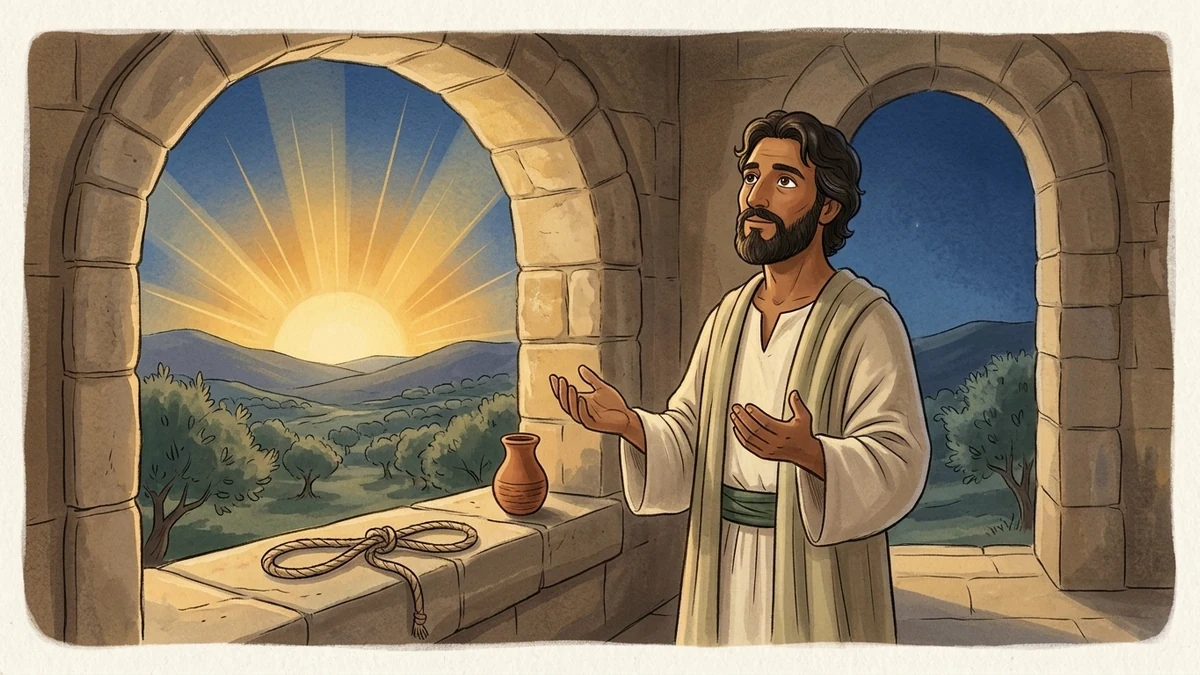
““Everything is permissible for me,” but not everything is beneficial. “Everything is permissible for me,” but I will not be mastered by anything. “Food for the stomach and the stomach for food,” but God will destroy them both. The body is not intended for sexual immorality, but for the Lord, and the Lord for the body. By His power God raised the Lord from the dead, and He will raise us also.”, 1 Corinthians 6:12-14 (Berean Standard Bible, BSB)
When “Nothing Is Wrong With It” Starts Running the House
Almost anyone can spot an obvious scandal from a mile away. The more slippery terrain in Christian life is usually different: socially acceptable, seemingly harmless routines that we defend with an automatic “there is nothing wrong with this.” It might be an endless stream of short videos after dinner, checking work messages in the middle of a conversation with your children, compulsive news scrolling, a series that eats into midnight hours, or turning to food and online shopping for quick relief whenever the day feels heavy.
None of these things come with a warning label on the door. Yet little by little, we notice our minds feel divided, sleep grows thin, prayer turns into a rushed chore, and patience with our spouse wears down. When someone in the family points it out, an immediate defensive edge rises up. Without realizing it, what began as ordinary rest or a daily habit has quietly taken the driver’s seat.
Right into that gray zone steps the Apostle Paul with liberating clarity in 1 Corinthians 6:12-14. He shows that the measure of Christian maturity is not asking how close we can walk to the edge without breaking an explicit rule, but asking who actually holds authority over our hearts and our bodies.
The Corinthian Context and a Theology of the Body
Corinth was a prosperous, cosmopolitan port city shaped by moral permissiveness. Some members of the local church had absorbed a common Greek assumption: the idea that the soul alone mattered to God, while the body was merely a temporary shell destined to fade away.
Building on that assumption, they repeated two popular slogans to justify their choices: “Everything is permissible for me” and “Food for the stomach and the stomach for food.” Their logic sounded convenient. If the body needs food and will eventually perish, why restrict other physical appetites? Christian freedom was being used as a cover for self-indulgence.
Paul does not respond by canceling freedom in Christ. Instead, he quotes the Corinthians’ own motto twice and places two practical filters right beside it that change everything.
First, “not everything is beneficial.” In the original Greek, the verb points to what brings real advantage, builds up, and serves the good of the community. An activity may not be forbidden in itself, yet if it dulls our spiritual alertness, thins out conversations at home, or drains energy from our responsibilities, it is not beneficial.
Second, “I will not be mastered by anything.” There is an intentional wordplay in the Greek text between having authority over things (exesti) and being brought under the authority of something (exousiasthesomai). People who boast of being free to do whatever they please often end up enslaved to the very habits they chose.
In verses 13 and 14, Paul moves beyond practical discipline to lay down a deep theological foundation: the body was not made for waste or sexual immorality, but for the Lord. The proof of its worth lies not only in the present, but in the future guaranteed by the resurrection. Just as God raised Christ from the dead, He will raise our bodies by His power. What we do with our time, our eyes, and our physical routines carries eternal weight. One verse later, Paul underscores this living union with Christ:
“Do you not know that your bodies are members of Christ? Shall I then take the members of Christ and unite them with a prostitute? Never!”, 1 Corinthians 6:15 (Berean Standard Bible, BSB)
We do not inhabit disposable shells. We carry bodies united to Christ, destined for glory and called to reflect His lordship in everyday choices.
Recognizing and Breaking Subtle Bondages at Home
Overcoming habits that quietly dominate the mind takes honesty to diagnose the pattern and steadiness to reorder daily routines. We often seek wisdom for major career or financial moves while leaving ordinary evening hours at the mercy of impulse.
Apply the interruption and absence test
Want to know whether a daily habit has gained too much control over you? Watch two simple reactions. First, notice how you respond when your spouse or child interrupts your screen time or distraction. If your automatic reflex is impatience or disproportionate irritation, an attachment has formed. Second, try stepping away from that specific entertainment for seven days. If its absence triggers constant restlessness or an unbearable sense of emptiness, you are no longer just using the tool; it has begun using you.
Trade the permission question for the building-up question
Instead of asking “is this a sin?”, start asking “is this beneficial for the person Christ is forming in me and for the atmosphere of our home?” That shift in perspective clears away dozens of excuses. A show that fills the mind with cynicism, a social feed that stirs envy, or a work habit that leaves only scraps of attention for your family may feel permissible on paper, yet it does not serve anyone pursuing sobriety and love.
Put physical boundaries around your attention
Human willpower is fragile when tired. Do not rely solely on good intentions at ten o’clock at night. If your phone steals your first and last thoughts of the day, leave the charger outside the bedroom. If background television replaces table conversation at dinner, turn it off during meals. Setting practical guardrails is not legalism; it is wise stewardship of your freedom.
Fill the space with what truly restores
No habit is conquered by subtraction alone. When you remove a distraction that served as emotional anesthesia, boredom or fatigue shows up right behind it. Plan concrete replacements: a short walk after work, reading a good book aloud, unhurried conversation with your spouse, or a quiet time of prayer before bed. Your body belongs to the Lord and thrives on real rest, not endless stimulation.
Questions for Personal or Marital Reflection
- Which “permissible” habit has claimed the largest share of my free time over the past few weeks? Looking at how my day ends, does it leave me with peace and vigor, or mental fatigue and regret?
- Where do I use exhaustion as an excuse to indulge in mindless distractions? In what healthier ways could I rest my body without numbing my mind?
- How has my relationship with screens, work, or personal routines affected the attention I give those at home? What would my spouse or children say if they answered that question candidly?
Study and Practice Guide (18 Minutes)
- Attentive reading (5 min): Read 1 Corinthians 6:12-20 slowly, noticing how Paul connects Christian freedom to the resurrection and belonging to Christ.
- Honest inventory (8 min): Write down one habit or distraction that has claimed too much space in your routine. Acknowledge before God whether it has been building up or mastering your mind.
- Practical decision and prayer (5 min): Set one clear boundary for the next seven days (a screen cutoff hour, a brief media fast, or a new family agreement) and pray, committing your body and schedule to the Lord.
Frequently Asked Questions (FAQ)
What does 'Everything is permissible for me, but not everything is beneficial' mean?
In 1 Corinthians 6:12, Paul quotes a slogan the Corinthians themselves used to excuse excess and sets two clear boundaries: not everything allowed is helpful or spiritually healthy, and a believer must never let a habit, pleasure, or routine gain mastery over their will.
Why does Paul bring up food, the stomach, and the resurrection of the body in this passage?
Some believers in Corinth treated physical desires as temporary and spiritually irrelevant, comparing sexual immorality to the ordinary need for food. Paul corrects that error by reminding them that the body belongs to the Lord and will be raised by God's power, giving it lasting dignity.
How can I tell if a permissible habit or form of entertainment has mastered me?
Clear warning signs appear when you snap at family members for interrupting you, lose planned hours of sleep or prayer to that habit, or find that going even a few days without it leaves you restless and irritable.