
Walking Through the Valley of the Shadow of Death with the Good Shepherd
Bible study on Psalms 23:1-4 about comfort in grief: the valley of the shadow of death is a path we pass through, not a permanent home, and the Shepherd walks beside us.
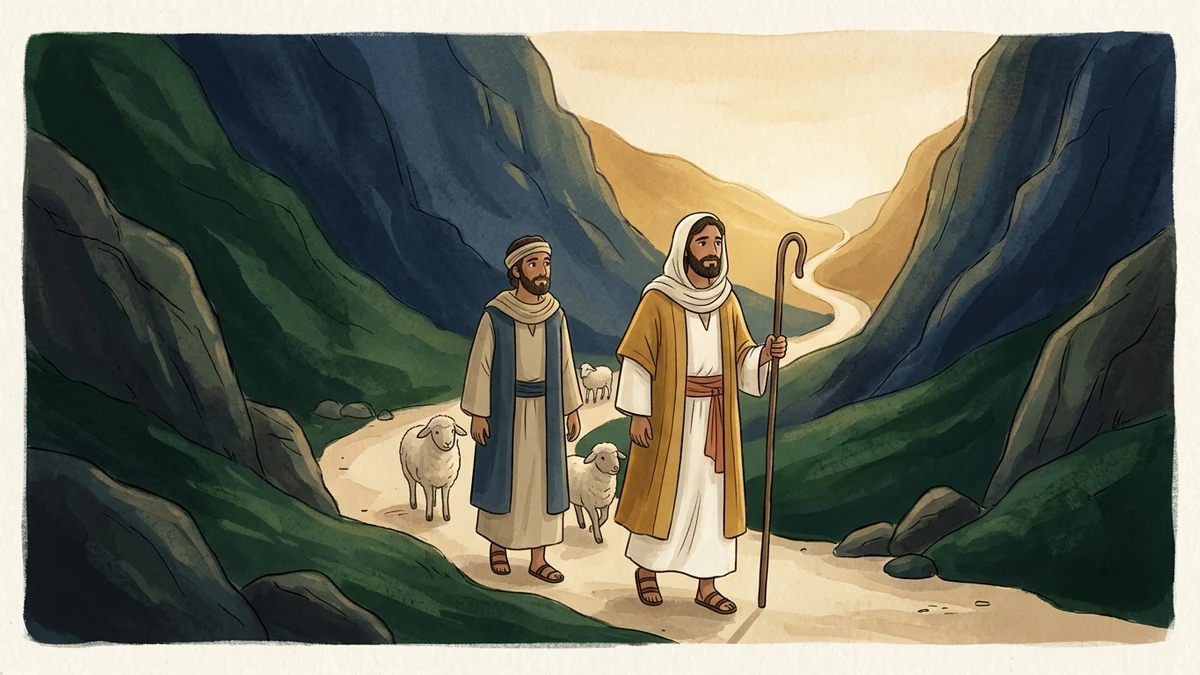
“A Psalm of David. The LORD is my shepherd; I shall not want. He makes me lie down in green pastures; He leads me beside quiet waters. He restores my soul; He guides me in the paths of righteousness for the sake of His name. Even though I walk through the valley of the shadow of death, I will fear no evil, for You are with me; Your rod and Your staff, they comfort me.”, Psalms 23:1-4 (Berean Standard Bible, BSB)
When the house grows too quiet
There is a stretch of grief that arrives after the funeral flowers have faded and the sympathy cards stop coming. The rest of the world resumes its usual pace, while inside your home everything feels slightly out of step. An empty chair at dinner, a familiar song on the radio, or the simple task of sorting through personal belongings can trigger a sudden wave of fear and exhaustion.
Many believers carry a quiet guilt alongside their sorrow, wondering why they do not feel stronger or more composed. They assume faith ought to shield the heart from breaking. Yet Scripture never asks us to pretend that loss does not hurt. Psalm 23, perhaps the most whispered passage in hospital rooms and beside gravesites across the centuries, was not written to deny the reality of darkness. It was given to teach us how to breathe inside it.
When a family walks through bereavement, time loses its predictable rhythm. Some mornings you can look back at shared memories with gratitude; other mornings the weight in your chest wakes you before sunrise. David wrote this song for that honest, unpolished human reality.
From quiet waters to a narrow gorge
David knew the work of a shepherd long before he wore a crown. Growing up in the hills around Bethlehem, he understood that the terrain of Judea was not all rolling green meadows. To move a flock from one grazing area to another, a shepherd often had to lead them through deep, narrow canyons where sunlight barely reached the floor and wild animals lurked among the rocks. Shepherds called those passages valleys of deep shadow.
The Hebrew word often translated as “shadow of death” (tsalmavet) conveys thick, oppressive gloom that hides the path ahead. David does not soften the image. He never claims the gorge is bright or easy. He states plainly that even those who belong to the Lord must walk through such places.
Look closely, however, at a subtle shift in verse 4. Throughout the first three verses, David speaks about God in the third person: “He makes me lie down,” “He leads me,” “He restores my soul.” The moment the trail plunges into darkness, his language changes. He stops describing God from a step back and speaks directly to Him: “for You are with me.”
In open sunlit pastures, we talk about God; in the canyon, we talk to God. Deep sorrow strips away polite religious distance and brings the soul face to face with its Maker.
Notice the verb as well: “walk through.” A valley is a corridor, not a campsite. The Good Shepherd does not lead His sheep into the dark to abandon them there. He walks ahead and beside them until they emerge on the other side.
The rod: the staff: and a table set in peace
David names two ordinary tools every shepherd carried at his belt: a rod and a staff. The rod was a short, heavy wooden club used to drive away wolves, lions, or thieves hiding in the shadows. The staff was a long pole with a curved crook at the top, used to nudge wandering sheep back onto the path or lift a lamb that had slipped down a rocky slope.
Grief leaves us exposed to both external strain and internal ambush. Fear about the future, regret over things left unsaid, and sheer physical fatigue can make every decision feel overwhelming. Trusting that the Lord carries both rod and staff means resting in His twofold care: He guards your mind against despair, and He gently steadies your feet when you no longer have the strength to walk straight.
Right after describing the dark gorge, the psalmist shifts the scene to a warm banquet hall:
“You prepare a table before me in the presence of my enemies. You anoint my head with oil; my cup overflows.”, Psalms 23:5 (Berean Standard Bible, BSB)
In the ancient Near East, being seated at a host’s table meant coming under that host’s personal protection. Even when enemies surround the perimeter, including death itself, which Scripture calls the last enemy, the believer is welcomed as an honored guest. Anointing oil soothed skin blistered by desert wind and harsh travel. God does more than bring His people out of the valley; He tends to the wounds gathered along the way.
Practical ways to walk through these days at home
Moving through bereavement with spiritual honesty requires patience with your own pace and gentle care within the household.
Name your sorrow before God without editing it
Crying, feeling exhausted, or admitting that a day felt unbearable is not a failure of faith. David poured his rawest grief into sung prayer. Set aside a few unhurried minutes to tell the Lord honestly what aches most today, without trying to sound stronger than you feel. Honesty before God clears the ground for real comfort.
Let Scripture speak when you have no words to pray
On days when emotional fatigue leaves your mind foggy, do not pressure yourself into long devotional routines. Read the first four verses of Psalm 23 slowly, lingering over the simple line: “You are with me.” Let God’s steady promise carry the weight when your feelings rise and fall.
Give each person in the home room to grieve differently
Inside one household, people rarely process loss at the same speed or in the same way. One spouse may need to talk through memories; another may need quiet space to cope. Resist the urge to measure everyone’s grief by the same clock. Small acts of presence, like sharing a simple meal, taking an evening walk together, or praying briefly before sleep, become the quiet means by which God steadies your home.
Questions for personal or family reflection
- Reading Psalms 23:1-4 today, which image speaks most directly to your heart right now: quiet waters, restoring the soul, walking through the valley, or the comfort of the rod and staff?
- At what hours of the day does loneliness or anxiety tend to hit hardest, and how might you turn those moments into direct conversation with the Lord (“You are with me”)?
- How can the people in your home support one another this week without pressuring anyone to “move on” too quickly?
- Even through recent tears, is there one small sign of God’s provision or quiet care you can thank Him for today?
Frequently Asked Questions (FAQ)
Why does David speak of walking 'through' the valley of the shadow of death rather than staying there?
The Hebrew imagery pictures a narrow, shadowy gorge through which a flock had to travel to reach fresh pasture. David acknowledges that the darkness and danger are real, yet insists the valley is a passage under the Shepherd's guidance, not a final destination.
What do the shepherd's rod and staff mean for someone walking through grief?
In ancient Israel, a shepherd's rod was a sturdy club used to fend off predators and protect the flock, while the staff was a long hooked pole used to guide sheep or pull them back from steep ledges. Together they symbolize active protection and gentle rescue when sorrow leaves us vulnerable.
How does the tone of Psalm 23 shift in verse 4, and why does it matter?
In verses 1 to 3, David speaks about God in the third person ('He makes me lie down', 'He restores'). Once he enters the dark valley in verse 4, he speaks directly to God ('for You are with me'). In deep grief, theology becomes personal encounter.