
Forgiving One Another, Just as in Christ God Forgave You
Bible study on Ephesians 4:31-32 about forgiveness at home: why bitterness grows among those closest to us and how Christ's grace frees the heart to begin again.
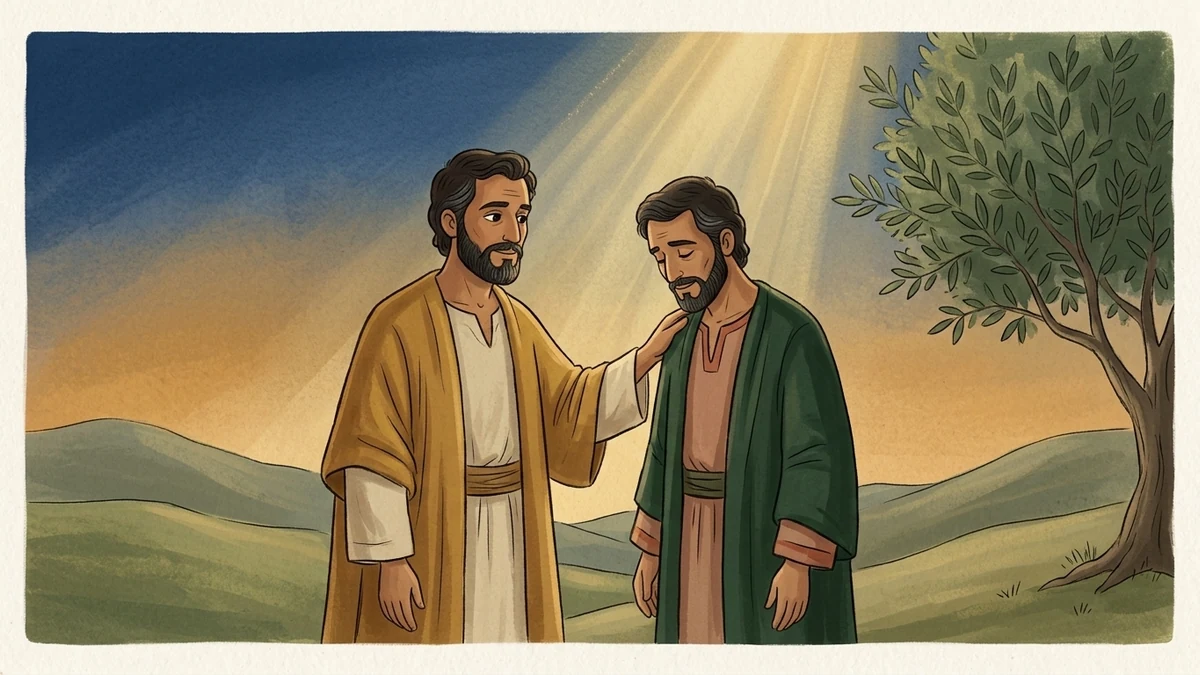
“Get rid of all bitterness, rage and anger, outcry and slander, along with every form of malice. Be kind and tenderhearted to one another, forgiving each other just as in Christ God forgave you.”, Ephesians 4:31-32 (Berean Standard Bible, BSB)
When the Hurt Comes from Someone Close
It is fairly easy to stay polite and patient with strangers who cross our path for five minutes. The real test of the heart takes place inside the family, among people who know our weaknesses, share the same budget, sit at the same table, and know exactly which words cut deepest. When an offense comes from someone very close, disappointment arrives tangled with a sense of betrayal.
In those moments, resentment rarely shows up as a dramatic explosion right away. More often it settles in quietly: a clipped reply in the kitchen, a refusal to make eye contact, or the stubborn memory of an old mistake brought back up during every new disagreement. When we try to forgive through sheer willpower, we quickly reach the end of our breath. Memory keeps presenting the bill, and pride demands some form of payment before letting go.
The Path of Ephesians 4: From Hidden Bitterness to Remembered Grace
Paul writes the letter to the Ephesians while imprisoned in Rome, keeping his eyes fixed on the scale of Christ’s saving work. Before giving a single practical instruction about relationships, he spends the first three chapters unfolding the spiritual rescue God accomplished for people who were dead in their sins. Only then, as chapter 4 opens, does the apostle urge his readers to live in step with that new identity:
“As a prisoner in the Lord, then, I urge you to walk in a manner worthy of the calling you have received:”, Ephesians 4:1 (Berean Standard Bible, BSB)
It is inside that calling that we need to read Ephesians 4:31-32. Paul is not offering tips on household etiquette; he is giving an accurate diagnosis of how untreated pain poisons a home. First comes bitterness, the quiet sourness nobody else sees. Left unchecked before God, it ferments into rage and anger, spills over into outcry during arguments, and hardens into slander, when we begin speaking poorly of the other person or reducing them to their worst moments.
The apostolic command is clear: all of it must be put away. Yet the human heart cannot live in a vacuum; the space left by bitterness must be filled with new virtues. That is why verse 32 lays out the exchange: kindness in daily speech, tenderheartedness toward another’s frailty, and mutual forgiveness.
The key to the entire passage sits in the closing phrase: “just as in Christ God forgave you.” Paul shifts our gaze away from whether the offender deserves grace and toward the depth of the pardon we ourselves have received. When we stand before the cross in Scripture, we see that God did not wait for us to pay back our debt before welcoming us. The source of our ability to forgive is not human willpower, but remembering how much Christ has already forgiven us.
Concrete Ways to Disarm Resentment at Home
- Interrupt the cycle before the shouting: Notice the moment a small irritation begins turning into stored bitterness. Instead of collecting heavy silences until patience snaps, ask God for clarity to talk honestly while your heart is still willing to listen.
- Remember your own forgiven debt: Before demanding perfection from a spouse, children, or parents, pause briefly in prayer and recall a failure of your own that God covered with patience. That memory disarms any spirit of superiority.
- Trade sharp edges for kindness: The kindness of Ephesians 4:32 proves itself in ordinary details, such as answering without sarcasm, offering a warm gesture without keeping score, or letting go of the need to have the last word in a petty argument.
- Separate forgiveness from naivety: Forgiving does not mean hiding serious wrongs or enduring mistreatment in silence. It means refusing to nurse hatred or wish harm on the other person, making room for truthful conversation or, where needed, wise pastoral counsel.
Questions for Personal or Family Reflection
- Is there an old issue at home that looks settled on the surface, yet still comes back to my mind as evidence against the other person?
- Over the past few days, have my words and tone reflected stored bitterness or the kindness of someone forgiven by God?
- What simple step toward peace (an apology, a calm conversation, an unforced act of care) can I take today so resentment does not take root?
Frequently Asked Questions (FAQ)
What does Paul mean in Ephesians 4:31 when he tells us to get rid of all bitterness, rage, and outcry?
Paul traces a very common emotional chain inside the home: hidden bitterness turns into simmering rage, erupts into anger and shouting, and ends in slander that tears down the other person's character. Getting rid of these things means interrupting that cycle at the root before resentment becomes the permanent climate of the household.
Does forgiving as God forgave us in Christ mean pretending nothing happened?
No. Biblical forgiveness does not deny the reality of a wrong or remove the need for healthy boundaries and honest conversation. It means releasing the desire for payback and ongoing emotional scorekeeping, entrusting justice to God and choosing kindness because Christ has already paid an infinitely greater debt on our behalf.
How does the opening of the chapter in Ephesians 4:1 connect with the call to forgive at the end?
In Ephesians 4:1, Paul urges believers to walk worthy of their calling. Having spent chapters 1 through 3 unpacking all that God has done for us in Christ, he presents forgiveness and tenderheartedness in chapter 4 as a natural response to grace already received, rather than an isolated moral effort.