
Up to Seventy-Seven Times: Forgiveness as a Way of Life in the Family
In-depth Bible study on Matthew 18:21-22 about recurring forgiveness in the family: the context of Peter's question, Jesus' answer, and how to avoid emotional burnout.
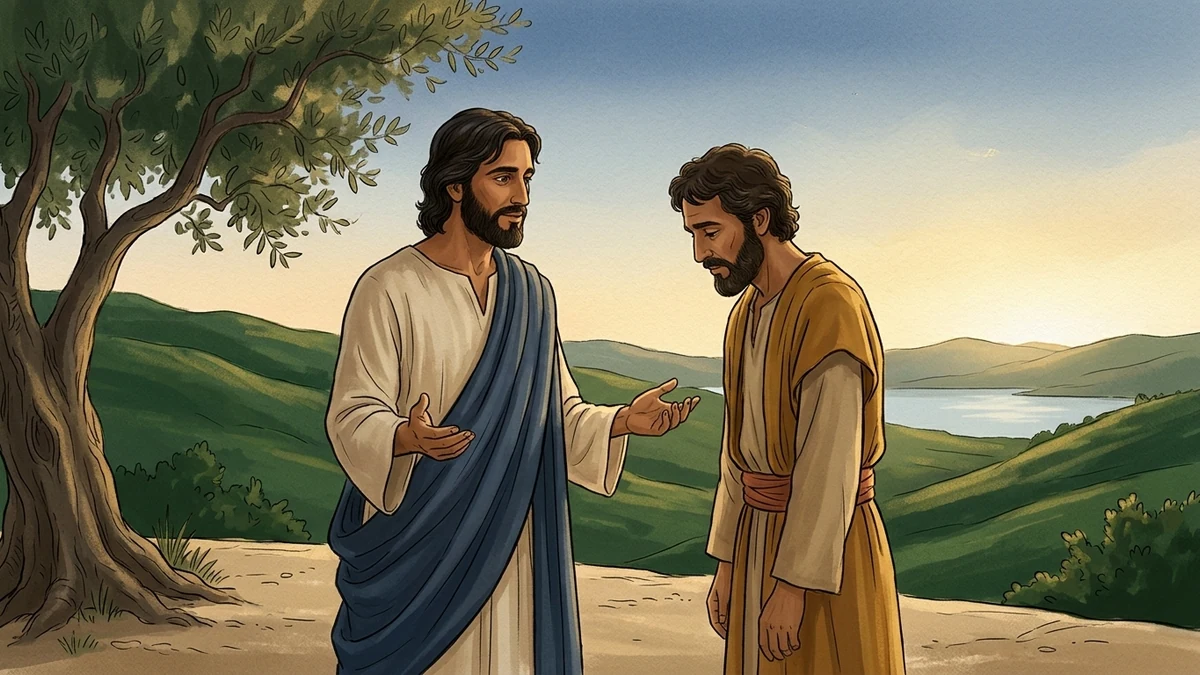
“Then Peter came to Jesus and asked, “Lord, how many times shall I forgive my brother who sins against me? Up to seven times?” Jesus answered, “I tell you, not just seven times, but seventy-seven times!”, Matthew 18:21-22 (Berean Standard Bible, BSB)
1. The Specific Weariness of Forgiving the Same Flaw
There is a vast difference between forgiving a one-time accident and forgiving a pattern that keeps returning. When someone in the family stumbles for the first time, we usually find reserves of understanding. It stings, yet we can still tell ourselves that everyone has an off day. Real exhaustion sets in on the fifth, tenth, or twentieth time the same impatience flares up, the same promise goes unbroken, or the same coldness settles over the dinner table.
At that point, a quiet question surfaces that few people dare ask out loud: where does Christian patience end and sheer naivety begin? The weariness of forgiving repeated shortcomings slowly drains away hope. Little by little, we stop expecting growth and start keeping an invisible ledger. Each fresh mistake is no longer weighed on its own; it is added to an old file we keep in our memory to prove we have every right to stay hurt.
When Peter stepped up to Jesus in Matthew 18:21-22, he brought that exact practical tension. Peter lived in close community, knew the daily friction among the disciples, and understood how hard it is to walk beside people who keep tripping over the same flaws. His question was not abstract theology; it was a search for a reasonable boundary that would keep the heart from being taken advantage of.
2. The Context of Matthew 18: Truth and Grace at the Same Table
To read Matthew 18:21-22 rightly, we have to see the whole chapter as a single discourse from Jesus about life in the church and the household. Matthew 18 is often called the “community discourse” because it addresses how Christ’s followers are meant to care for one another when things go wrong.
The chapter opens with the disciples arguing over who is the greatest in the kingdom of heaven. Jesus answers by placing a little child in their midst and teaching that spiritual greatness begins with humility. Next, He warns how serious it is to cause little ones to stumble and tells the parable of the shepherd who leaves ninety-nine sheep on the hills to search for the one that wandered away.
Right before Peter’s question, in verses 15 through 20, Jesus lays out a clear path for addressing sin within the community of faith: go to your brother privately and point out the fault; if he will not listen, bring one or two witnesses; if he still refuses to listen, tell it to the church. That detail is vital because it corrects a common misunderstanding: Jesus never told us to sweep wrongs under the rug. He taught that truth must be spoken clearly and thoughtfully.
It was right after hearing Jesus speak about confronting a brother who sins that Peter raised his hand with his question. In Jewish tradition at the time, some teachers held that you were obligated to forgive the same offense up to three times; on the fourth, your duty ended. Peter doubles that number and adds one more, landing on seven, the biblical number of completeness. He probably expected praise for his generosity.
Jesus’ answer dismantles every attempt to turn mercy into a spreadsheet: “I tell you, not just seven times, but seventy-seven times!” Whether translated as “seventy-seven times” or “seventy times seven,” the point is identical: in God’s kingdom, you do not stop forgiving when a counter runs out. Many scholars note the likely echo of Lamech’s song of unlimited vengeance in Genesis, where retaliation knew no bounds. Jesus flips the logic of a fallen world upside down: where sin multiplies revenge without limit, grace multiplies forgiveness without limit.
3. The Parable That Reveals the Source of Forgiveness
Jesus does not leave His answer hanging in midair. Immediately after saying “seventy-seven times,” He begins a story in verse 23:
“Because of this, the kingdom of heaven is like a king who wanted to settle accounts with his servants.”, Matthew 18:23 (Berean Standard Bible, BSB)
In the rest of the parable (Matthew 18:24-35), one servant owes the king ten thousand talents, an astronomical sum impossible to repay in a lifetime, worth tens of thousands of years of labor. When the servant begs for patience, the king is moved with compassion, releases him, and cancels the entire debt. Yet the moment that same servant walks out of the king’s presence, he finds a fellow servant who owes him a hundred denarii, roughly a hundred days’ wages. He grabs him by the throat, demands immediate payment, and throws him into prison. When the king hears what happened, he is outraged and hands the merciless servant over to the jailers.
The pastoral lesson is direct and sobering. The merciless servant’s problem was not a lack of willpower; it was spiritual amnesia. Within minutes, he forgot the size of the pardon he had just received. When we forget how much God has forgiven us in Christ, the shortcomings of a spouse, a child, or a parent loom massive and unforgivable. When we keep the memory of the cross alive, we still see clearly that another person’s failure is real and painful, yet never larger than the debt the Lord canceled for us.
That is why all of Scripture works together to sustain hope through these daily struggles. As the Apostle Paul writes:
“For everything that was written in the past was written for our instruction, so that through endurance and the encouragement of the Scriptures, we might have hope.”, Romans 15:4 (Berean Standard Bible, BSB)
4. What Unlimited Forgiveness Is and What It Is Not
Many families hesitate to apply Matthew 18:21-22 because they confuse Christian forgiveness with passive submission to destructive behavior. Clearing up that line restores spiritual health to a home:
- Forgiving is not erasing memory or pretending it did not hurt: God does not ask for artificial amnesia. Forgiving means deciding not to use the memory of pain as a weapon of attack or bargaining chip in future arguments.
- Forgiving does not remove firm dialogue or discipline: At home, parents still need to correct children who repeat disobedience, and spouses still need to speak honestly when there is neglect, dishonesty, or disrespect. Jesus’ mercy in Matthew 18 walks hand in hand with the loving confrontation of Matthew 18:15.
- Forgiving does not mean staying in danger or abuse: Where there is physical violence, severe emotional abuse, or addictions destroying the safety of the home, forgiveness frees the heart from hatred, while wisdom requires protection, firm boundaries, and help from mature believers and proper authorities.
- Forgiving means stepping down as a permanent debt collector: Most of the time, what wears a home down is not a felony, but recurring human flaws: sharpness when tired, lateness, stubbornness, thoughtless remarks. In those moments, keeping a mental scorecard poisons the collector even more than the offender.
5. Concrete Practices for Making Forgiveness a Way of Life at Home
- Retire the phrase “you always do this”: When a mistake happens again, address today’s incident without dragging out the archive of the last five years. Speaking about the present moment leaves room for real repentance; digging up the entire past usually triggers defensiveness and shutdown.
- Set aside calm moments for hard conversations: Never try to resolve recurring patterns at the peak of irritation or in front of young children. Wait until tempers cool, pray for gentleness, and talk face to face about how the behavior affected you and the household.
- Remember your own need for grace before confronting: Before pointing out someone else’s repeated flaw, ask yourself where you have also needed the repeated patience of God and your family over recent months.
- Pray for the heart of the person who keeps stumbling: It is very hard to keep resenting someone you genuinely pray for before God. Asking the Lord to mature the other person turns frustration into intercession.
- Notice small steps of growth instead of demanding instant perfection: Changing habits takes time. When you see someone at home trying to respond better than they did last week, acknowledge that effort with gratitude.
- Seek encouragement and direction in Scripture together: Building a weekly habit of reading a passage of Scripture aloud at the table or in the living room reminds everyone that the home belongs to Christ, not to whoever speaks the loudest.
6. Questions for Personal or Family Reflection
- Is there a recurring flaw in someone at home where I have already run out of patience and slipped into coldness or sarcasm?
- Have I been confusing forgiveness with resentful silence, keeping a mental list of wrongs instead of speaking the truth in grace as Jesus teaches in Matthew 18?
- Looking at the parable of the king and the servant (Matthew 18:23-35), when have I forgotten the scale of the pardon I received from God while judging smaller shortcomings inside my own home?
- What practical step of truth and mercy can I take this week to replace constant scorekeeping with an honest new beginning?
Frequently Asked Questions (FAQ)
Why did Peter ask Jesus if he should forgive 'up to seven times'?
Rabbinic teaching of the day often held that a person was required to forgive a repeated offense up to three times. By suggesting seven, Peter likely thought he was being remarkably generous. Jesus' reply, 'seventy-seven times' (or seventy times seven), does not set a new numerical ceiling, but declares that forgiveness in God's kingdom has no upper limit.
Does forgiving seventy-seven times mean allowing someone to keep harming the family without boundaries?
No. Earlier in the very same chapter, Jesus instructs believers to confront a brother who sins privately, and if necessary, with witnesses and the church. Unlimited forgiveness removes the desire for revenge and keeps the heart open to repentance, but it never forbids clear boundaries, fair consequences, or protection from destructive behavior.
How does the parable starting in Matthew 18:23 explain Jesus' teaching on forgiveness?
The parable of the king settling accounts with his servants draws a sharp contrast between the unpayable debt God forgave us and the small debts people owe one another. Anyone who forgets the scale of the mercy they received grows harsh and impatient at home; anyone who remembers it finds strength to forgive from the heart.