
You Are the God Who Sees Me: Hagar's Encounter in the Quiet Desert
Bible study on Genesis 16:13-14 about loneliness and God's care: when injustice and silence drive us into the desert, the God who sees calls us by name.
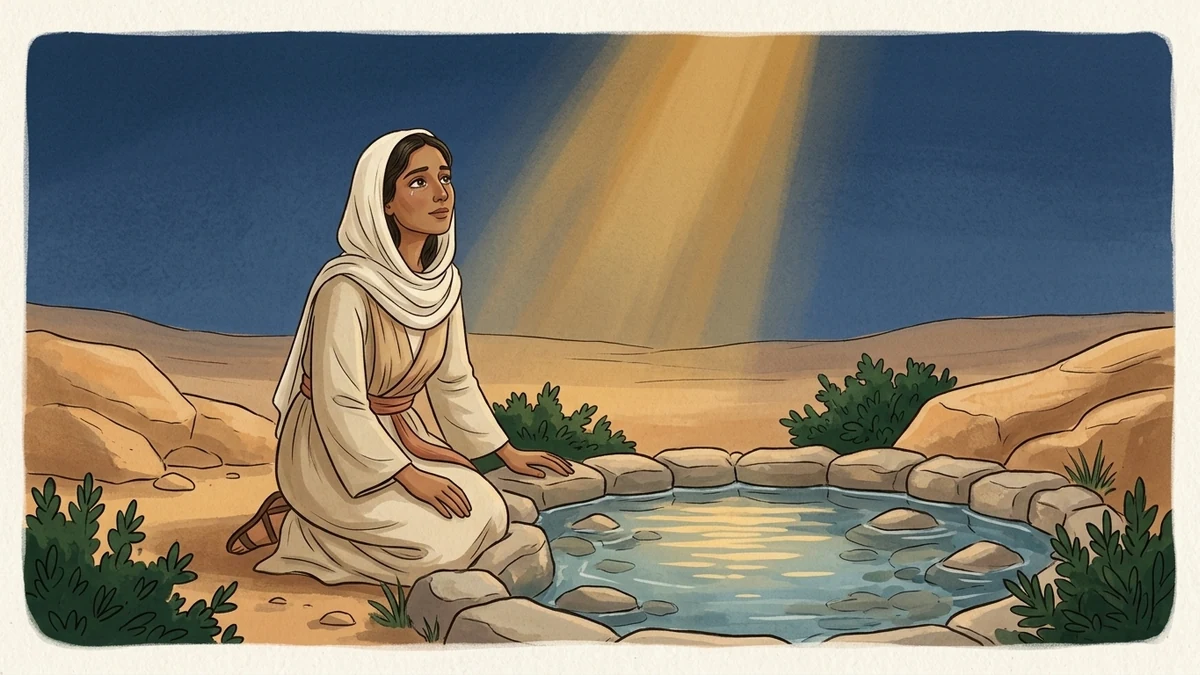
“So Hagar gave this name to the LORD who had spoken to her: “You are the God who sees me,” for she said, “Here I have seen the One who sees me!” Therefore the well was called Beer-lahai-roi. It is located between Kadesh and Bered.”, Genesis 16:13-14 (Berean Standard Bible, BSB)
Some pains shout for attention, while others go quiet because no one seems willing to listen. Feeling invisible inside your own home, at work, or even in church is one of the most draining kinds of loneliness. It is not merely being alone in an empty room; it is realizing that your daily effort is taken for granted, your exhaustion goes unnoticed, and when you try to speak about what hurts, people look right past you.
That quiet ache often lands on the person who cares for everyone else without being cared for, the one holding a family together behind the scenes, or someone wounded by decisions made without considering their voice. In moments like that, the temptation is to pull back slowly, stop expecting warmth from anyone, and wonder if even God is busy with more important people.
Right in the middle of that lonely flight, Genesis 16:13-14 opens one of the tenderest scenes in Scripture. The central figure here is not a celebrated matriarch or a queen, but a pregnant Egyptian servant, caught in an unfair household arrangement and driven into the wilderness. Out there, far from Abram’s tents, where no human being went looking for her, she discovered that the Lord saw her by name and cared for her future.
The Pain of Being Treated as a Role Instead of a Person
To feel the weight of Hagar’s encounter with God, we need to look honestly at the conflict leading up to verse 13. Genesis 16 is only 16 verses long, yet it holds a painful domestic crisis. Abram and Sarai had waited ten years in Canaan for the child God promised, and the promise seemed stalled. Driven by impatience, Sarai turned to a legal custom of the ancient Near East: she gave her Egyptian servant, Hagar, to Abram so she could build a family through her (16:1-3).
Nowhere does the text say anyone asked Hagar what she wanted. She belonged to the household, without legal standing or choice. Once Hagar conceived, however, tension broke out: she began looking on Sarai with contempt, and Sarai responded with harsh mistreatment. Instead of stepping in to protect the vulnerable woman involved, Abram washed his hands of the conflict: “Your servant is in your hands; do with her whatever you think best” (16:6). Mistreated by her mistress and abandoned by the father of her child, Hagar fled into the desert toward Egypt.
One detail in the Hebrew narrative is striking: up to that point, neither Abram nor Sarai calls Hagar by her name. To both of them, she is simply “my servant” or “your servant,” a functional role inside someone else’s plan. That kind of invisibility cuts deep. Many people today know what it feels like to be valued only for what they produce or fix for others, until exhaustion makes them want to walk away from everything.
The Meeting at the Spring: Exegesis of Genesis 16
Hagar stops beside a spring in the desert along the road to Shur, heading back toward her homeland (16:7). There the Angel of the LORD finds her and breaks the silence with two direct questions: “Hagar, servant of Sarai, where have you come from, and where are you going?” (16:8).
Notice three movements in God’s approach:
- God calls her by name: for the first time in the chapter, someone addresses Hagar as a person rather than a tool. At the same time, by adding “servant of Sarai,” the Lord acknowledges her real situation without pretending the past did not happen.
- God listens without rushing her: Hagar answers with plain honesty: “I am running away from my mistress Sarai” (16:8). She has no grand five-year plan; she only knows what she is fleeing from.
- God gives her direction and a future: the Angel instructs her to return and submit to her mistress, yet He does not send her back empty-handed. He promises countless descendants and tells her to name her son Ishmael, which means “God hears,” because the Lord had heard her misery (16:11).
Only after that conversation do verses 13 and 14 unfold:
“So Hagar gave this name to the LORD who had spoken to her: “You are the God who sees me,” for she said, “Here I have seen the One who sees me!” Therefore the well was called Beer-lahai-roi. It is located between Kadesh and Bered.”, Genesis 16:13-14 (Berean Standard Bible, BSB)
Hagar’s remarkable theology
Hagar does something unprecedented in Scripture: she is the first person in the Bible to give God a name. In Hebrew, she calls Him El Roi, “the God who sees me.” Her astonished question (“Here I have seen the One who sees me!”) holds two surprises at once.
The first surprise is geographical and spiritual: “Here.” In the ancient world, people assumed local gods belonged only to specific territories or favored powerful clan leaders like Abram. Out in the barren wilderness, far from Canaan’s altars, Hagar discovers that the God of Israel is not confined to the tents of the influential. He sees a foreign servant sitting alone in the sand.
The second surprise is personal: she lived to tell of meeting the living God (“Well of the Living One who sees me”). Instead of being crushed by divine holiness or overlooked because of her low social status, she was seen, heard, and sustained. Naming the exact spot (“between Kadesh and Bered”) turned that wilderness spring into a lasting landmark. Future generations of Israel would pass that well and remember that the covenant God also met an afflicted woman outside the camp.
The very next verse ties Hagar’s testimony back into Abram’s household memory:
“And Hagar bore Abram a son, and Abram gave the name Ishmael to the son she had borne.”, Genesis 16:15 (Berean Standard Bible, BSB)
When Abram accepts the name God chose, Ishmael (“God hears”), the entire family carries a living reminder of what happened. Abram and Sarai’s mistakes did not cancel God’s care for Hagar, and Hagar’s sorrow did not go unwitnessed before the Creator.
The Harmony of Scripture: Hope for Imperfect Households
One of the most honest features of the Bible is that it never hides the moral failures of its own heroes of faith. The father of faith failed to protect Hagar; the mother of the promise acted out of impatience and jealousy. Yet God stepped in without excusing the wrong and without abandoning an imperfect household still learning to trust Him.
The Apostle Paul explains why raw stories like Genesis 16 were preserved in Scripture:
“For everything that was written in the past was written for our instruction, so that through endurance and the encouragement of the Scriptures, we might have hope.”, Romans 15:4 (Berean Standard Bible, BSB)
Knowing that the same God who met Hagar between Kadesh and Bered steps into bruised homes today produces what Paul describes: endurance for unfinished seasons, real encouragement when no one else sees the tears, and hope that our story does not end in abandonment.
Practical Steps for Anyone Feeling Unseen Today
Bringing Genesis 16:13-14 into daily family life calls for comfort toward those who hurt and honest reflection for those living beside them.
1. Bring raw pain to God before walking out in reaction
Hagar fled because home had become unbearable, yet her conversation with God gave her clarity for the next step. When exhaustion or the sting of being overlooked builds up at home, take time alone to speak plainly with the Lord before making permanent decisions in the heat of hurt.
2. Remember that returning does not mean returning alone
Going back to Abram and Sarai’s tent was not easy, yet Hagar did not return as the same broken fugitive. She now knew the name of the One who saw her and carried a promise for her children. Often God does not instantly alter a difficult environment around us, but He transforms us inside so we can face reality with dignity instead of despair.
3. Practice the attentiveness of El Roi inside your own home
It also helps to turn the question around: is someone near us quietly carrying the role of an unnoticed servant? It might be an exhausted spouse, a quiet child who rarely complains, an aging parent, or a coworker. Thanking someone specifically for hidden work, asking how they are really doing, and listening without checking a phone are concrete ways to reflect the God who sees.
4. Turn desert places into memorials of faithfulness
Hagar named the well so she would never forget what God did there. At home, keep a simple record of answered prayers, verses that steadied a hard month, or moments when God brought clarity. When another dry season arrives, your household will already have its own well of remembrance. Sharing those quiet milestones with your children also teaches the next generation that faith does not depend on smooth circumstances, but on a living God who notices ordinary people in forgotten places.
Family Study and Conversation Guide (35 Minutes)
Set aside unhurried time this week to walk through these three steps alone or with your family:
- Read the full chapter (10 min): Read Genesis 16:1-16 slowly. Notice the contrast between human neglect in verses 1-6 and God’s personal attention in verses 7-15.
- Honest conversation at home (15 min): Talk gently about times when someone in the household felt unheard or quietly overloaded. Ask each other one practical way everyone can feel more genuinely seen this week.
- Prayer of surrender and care (10 min): Thank the Lord that He is El Roi, the God who sees, and pray by name for someone you know who is walking through a quiet desert out of sight.
Frequently Asked Questions (FAQ)
Why did Hagar call God 'the God who sees me' (El Roi) in Genesis 16:13?
Fleeing mistreatment in the desert without human protection, Hagar discovered that the Lord saw her personally and knew her story. She is the first person in Scripture to give God a name, recognizing that the Creator looks closely at those pushed aside.
What is the significance of the well Beer-lahai-roi between Kadesh and Bered?
The name means 'Well of the Living One who sees me.' Naming the exact location between Kadesh and Bered shows that Hagar's encounter was a real landmark in Israel's memory, proving God meets the afflicted even on the road of escape.
How does the birth of Ishmael in Genesis 16:15 complete the message of the passage?
The name Ishmael means 'God hears.' Together, the chapter weaves two truths about God's care: the Lord who saw Hagar's distress (vv. 13-14) also heard her cry and sustained her and her son (v. 15).